
What does a complete conveyor line look like in a packing center?
Packing centers in horticulture handle enormous volumes of product every single day. Whether you are processing cut flowers, potted plants, or fresh produce, the way product moves through your facility directly determines how fast, how accurately, and how cost-effectively you can operate. A well-designed conveyor line is the backbone of that movement, and understanding what one looks like from end to end can make the difference between a smooth operation and a bottleneck-filled workday.
For growers and operations managers in the horticulture sector, the question is rarely whether to invest in a conveyor belt system, but rather which configuration fits the specific demands of the facility. This guide answers the most important questions about complete conveyor lines in packing centers, from basic components to integration and rental options.
What is a complete conveyor line in a packing center?
A complete conveyor line in a packing center is an integrated system of transport belts, buffer sections, and handling stations that moves product continuously from one stage of the packing process to the next, without manual carrying or repositioning. It connects intake, sorting, packing, weighing, and dispatch into a single, uninterrupted flow.
In practice, this means product enters the line at one point and travels through every required processing step before leaving as a finished, packed unit ready for dispatch. The line is designed around the specific layout of the facility, the type of product being handled, and the required throughput. In horticulture packing centers especially, these lines must also withstand moisture, soil, and the physical demands of handling living plants or fresh produce.
What components make up a full conveyor line?
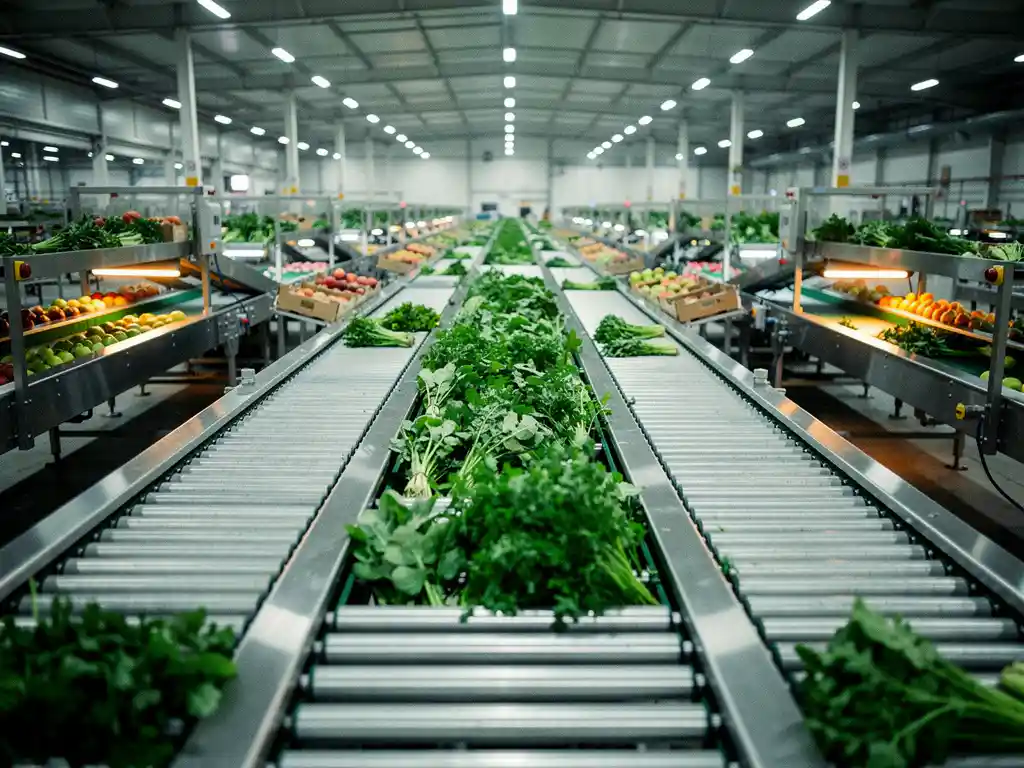
A full conveyor line in a packing center typically consists of intake belts, main transport belts, buffer belts, roller conveyors, elevator belts, and workstations equipped with weighing scales and lighting. Each component serves a specific function within the overall flow, and together they form a complete, coordinated system.
Here is a breakdown of the core components and their roles:
- Intake belts: Receive product at the start of the line and feed it into the system at a controlled pace.
- Main transport belts: Carry product along the primary route through the facility.
- Buffer belts: Absorb fluctuations in speed between stations, preventing backups and gaps.
- Roller conveyors: Allow product to be repositioned or rotated easily at manual workstations.
- Elevator belts: Move product between different height levels, for example, from floor level to packing-table height.
- Workstations: Integrated tables, weighing scales, and task lighting positioned along the line to support operators.
The strength of a well-designed system lies in the compatibility of all these components. When every belt and station is built to work together, the entire line can be configured and reconfigured as production demands change.
How does product flow through a packing center conveyor system?
Product flows through a packing center conveyor system in a continuous, directional sequence. It enters at the intake, moves through sorting and inspection zones, passes along packing and labeling stations, and exits at the dispatch or loading area. Buffer sections between stations ensure the flow stays smooth even when one station temporarily slows down.
The key to efficient product flow is matching belt speeds to the pace of each workstation. If a packing station operates slightly slower than the intake belt, a buffer section absorbs the difference so product does not pile up or create pressure on operators. This design principle reduces stress on both the product and the people handling it, which is especially important when working with fragile plants or fresh produce in a conveyor belt horticulture environment.
Good flow design also minimizes the distance operators need to walk or reach during their shift. When the line is laid out correctly, employees stay in one position and the product comes to them, rather than the other way around.
What’s the difference between fixed and mobile conveyor systems?
Fixed conveyor systems are permanently installed along a set route within the facility, while mobile conveyor systems are freestanding units on wheels that can be repositioned as needed. Fixed systems suit high-volume operations with a consistent layout, while mobile systems offer flexibility for seasonal work, changing product types, or facilities that cannot commit to a permanent installation.
Fixed systems generally deliver higher throughput and can be fully integrated into the building structure, including connections to overhead systems or automated machinery. They require upfront planning and installation but provide long-term stability and efficiency.
Mobile systems, such as the EasyMax and Wevab units we produce, are ideal when production volumes or floor layouts change regularly. They can be deployed quickly, moved between areas of the facility, and stored when not in use. For many horticulture businesses, the right answer is a combination of both: a fixed backbone for the main line, supplemented by mobile units at flexible points in the process.
How does a conveyor line integrate with other machines?
A conveyor line in a packing center integrates with other machines by serving as the connecting infrastructure between them. Potting machines, sorting systems, robots, labeling units, and weighing stations all feed into or receive product from the conveyor line, creating a single automated workflow rather than a series of isolated processes.
Integration requires that belt heights, speeds, and timing are matched to the input and output specifications of each connected machine. For example, a potting machine needs a belt at exactly the right height and speed to transfer freshly potted plants without tipping or jamming. A sorting robot needs consistent product spacing on the belt to operate accurately.
We design and install complete, integrated systems, which means the conveyor line and the machines connected to it are engineered together from the start. This single-source approach eliminates the compatibility issues that arise when components from different suppliers are combined after the fact, and it ensures that installation and commissioning go smoothly.
When should a packing center consider renting instead of buying?
A packing center should consider renting conveyor equipment when the need is seasonal, when the facility is evaluating a system before committing to a purchase, or when capital is not available in the short term. Renting allows operations to benefit from professional conveyor belt horticulture equipment immediately, without the full financial commitment of ownership.
Renting is particularly well suited to situations such as:
- Peak-season demand that exceeds the capacity of existing equipment.
- A new facility that is still optimizing its layout before permanent installation.
- A business that wants to test a specific configuration before investing in a fixed system.
- Short-term project work, such as a large one-off order or a temporary processing line.
We offer rental as a deliberate, low-threshold entry point for businesses that are not yet ready for a full purchase. In many cases, rental leads naturally to ownership once the value of the system has been demonstrated in practice. It is a practical way to experience the difference a well-designed conveyor line makes, without taking on the full investment on day one.
Frequently Asked Questions
How do I know which conveyor line configuration is right for my facility?
Start by mapping your current product flow and identifying where bottlenecks, manual handling steps, or speed mismatches occur. From there, consider your throughput targets, floor space, product type, and whether your layout is fixed or subject to change. Working with a supplier who designs and installs complete systems — rather than individual components — gives you the advantage of a configuration built around your specific operation rather than a generic off-the-shelf setup.
What are the most common mistakes packing centers make when setting up a conveyor line?
The most common mistake is treating the conveyor line as an afterthought rather than the central design element of the packing process. This often leads to mismatched belt heights or speeds between stations, insufficient buffer capacity, and poor workstation positioning that forces operators to over-reach or walk unnecessarily. Another frequent error is sourcing components from multiple suppliers without verifying compatibility, which creates integration problems during installation and ongoing maintenance challenges down the line.
How much maintenance does a conveyor line in a horticulture packing center typically require?
In a horticulture environment, conveyor lines are exposed to moisture, soil, fertilizers, and organic debris, so regular cleaning and inspection are essential. In practice, this means daily cleaning of belt surfaces and rollers, periodic checks of belt tension and alignment, and scheduled inspections of drive motors and sensors. Systems designed specifically for horticulture use — with sealed components and corrosion-resistant materials — significantly reduce maintenance frequency and extend the operational lifespan of the equipment.
Can a conveyor line be expanded or reconfigured after it has been installed?
Yes, and planning for future scalability from the start is one of the best investments a packing center can make. A well-designed fixed system uses modular components that allow sections to be added, extended, or repositioned as production volumes grow or product types change. If your operation is still evolving, discussing future expansion requirements with your supplier during the design phase ensures the infrastructure is in place to scale without requiring a full reinstallation.
How long does it typically take to install a complete conveyor line in a packing center?
Installation timelines vary depending on the size and complexity of the system, but most complete conveyor line installations in horticulture packing centers are completed within a few days to a couple of weeks. Facilities that have done thorough pre-installation planning — including accurate floor plans, confirmed machine integration points, and clear access for installation teams — experience the fastest and smoothest commissioning. Choosing a single-source supplier who handles both the equipment and the installation further reduces downtime and eliminates coordination delays between separate contractors.
What should I look for when evaluating a conveyor belt rental for a peak season?
Look for rental equipment that is clean, well-maintained, and appropriate for the specific product you are handling — not just any available unit. Confirm that the rental provider can deliver, set up, and collect the equipment within your required timeframe, and check whether technical support is available during the rental period if something goes wrong. Renting from a supplier who also manufactures and sells conveyor systems is an advantage, as their rental fleet is typically maintained to the same standard as new equipment and can be seamlessly combined with any permanent infrastructure you already have in place.
Is it possible to automate only part of a packing line while keeping other stages manual?
Absolutely, and for many horticulture operations this is the most practical starting point. A hybrid approach — where a conveyor line handles transport and buffering while operators perform sorting, quality checks, or packing manually at integrated workstations — delivers significant efficiency gains without requiring full automation. As volumes grow or labor costs increase, individual manual stations can be upgraded with automated machinery that connects directly to the existing conveyor infrastructure, allowing you to scale automation progressively rather than all at once.