

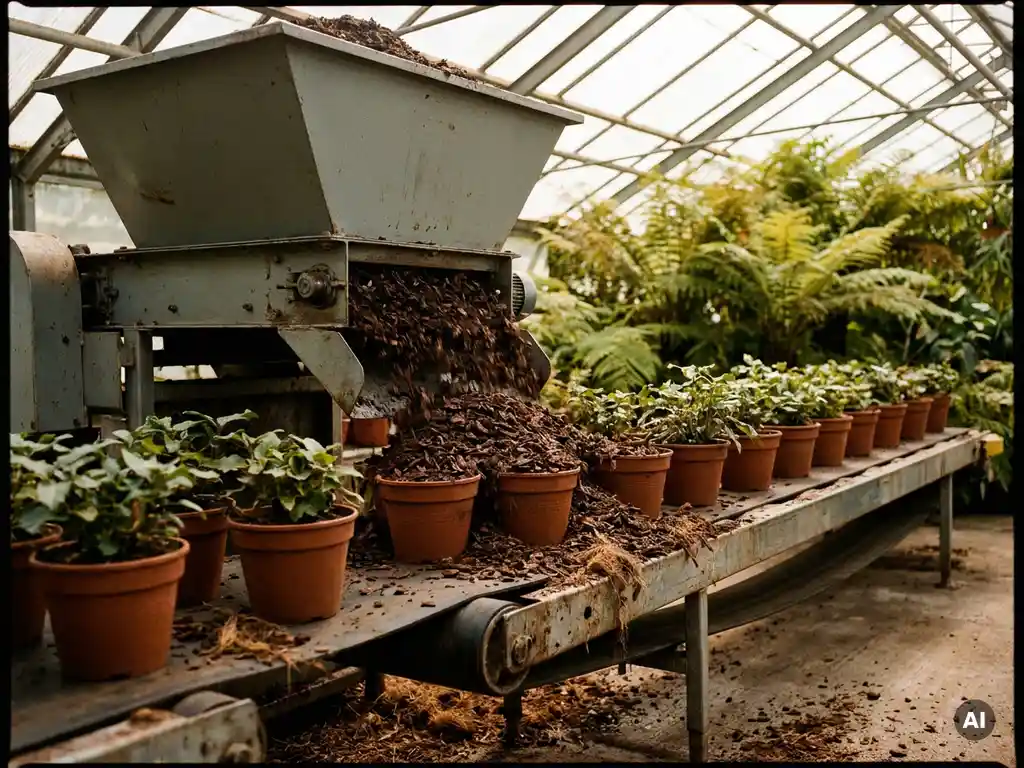
Can topping machines work with bark, soil and other covering materials?
Yes, topping machines can work with bark, soil, and other covering materials, but not all machines handle every substrate equally well. The key factor is how the machine’s feed mechanism and detection system are designed: coarser, fibrous materials like bark require more robust conveying components and consistent dosing control than fine potting soil. This article unpacks the most common questions growers ask about substrate compatibility, so you can match the right machine setup to your specific covering material.
What types of covering materials can potting machines handle?
Most professional potting machines can handle a range of covering materials, including standard potting soil, peat-based mixes, coco coir, composted bark, and decorative bark chips. The machine’s ability to process each substrate depends on particle size, moisture content, and how freely the material flows through the feed system. Fine, loose substrates like potting soil are the easiest to handle, while coarser materials like bark chips demand more from the conveying and dosing components.
In practice, the most common covering materials used in professional horticulture include:
- Standard potting soil – fine, free-flowing, and compatible with nearly all potting machines
- Peat-based and coco coir mixes – slightly fibrous but generally manageable with standard feed systems
- Composted bark – variable particle size; requires a machine with a robust conveyor and reliable dosing
- Decorative bark chips – the most challenging substrate due to irregular shape, low density, and tendency to bridge or jam in narrow feed channels
- Mixed substrates – combinations of soil and bark are common in ornamental plant production and place the greatest demand on consistent machine performance
The broader the range of substrates a machine can handle reliably, the more flexibility a grower has when production demands or product lines change across the season.
Why do some potting machines struggle with bark and coarse substrates?
Potting machines struggle with bark and coarse substrates primarily because these materials do not flow freely or uniformly through standard feed mechanisms. Bark chips are lightweight, irregular in shape, and prone to bridging, meaning they can clump together and block the feed channel rather than dropping cleanly into each pot. This leads to uneven filling, machine stoppages, and inconsistent pot quality at exactly the wrong moment.
Several mechanical factors contribute to this challenge:
- Feed channel width: Narrow channels designed for fine soil cannot accommodate larger bark particles without jamming
- Conveyor design: Open or loosely guided conveyor systems allow bark to shift and pile unevenly, disrupting the dosing rhythm
- Dosing consistency: Because bark is less dense than soil, volume-based dosing can produce very different fill weights from pot to pot
- Moisture sensitivity: Wet bark is significantly heavier and stickier than dry bark, which can cause the material to clump inside the machine
Cheaper or older machines often lack the structural rigidity and feed control needed to compensate for these variables. The result is frequent operator intervention, wasted material, and reduced output, all of which are costly during high-volume production runs.
How does automatic soil detection affect substrate compatibility?
Automatic soil detection improves substrate compatibility by continuously monitoring whether covering material is present and correctly positioned before each pot is filled. Rather than relying on a fixed timer or a manual setting, the machine adjusts its dosing in real time based on what it detects. This means inconsistencies in substrate flow, whether caused by bark bridging, variable moisture, or a mixed substrate, are compensated for automatically rather than resulting in underfilled or overfilled pots.
For bark-heavy or mixed substrate mixes, this matters considerably. Because bark does not flow as predictably as fine soil, a machine without automatic detection will produce noticeable variation in pot fill levels across a production run. Automatic detection closes that gap by triggering the fill cycle only when material is confirmed to be in the correct position, and by adjusting the timing or volume when the substrate behaves differently than expected.
The practical result is a more consistent end product with fewer rejects, less manual checking, and greater confidence when switching between substrate types mid-production.
What’s the difference between a standard and a PRO potting machine for mixed substrates?
The key difference between a standard and a PRO potting machine for mixed substrates lies in the level of automation and the precision of the feed and detection systems. A standard machine performs reliably with conventional potting soil and straightforward substrates, while a PRO model is built for more demanding conditions, including bark-heavy mixes, mixed substrates, and high-volume runs where consistency cannot be compromised.
Comparing the two for substrate versatility:
- Standard potting machine: Suitable for fine to medium substrates; operator may need to adjust settings manually when switching materials; dosing relies on preset parameters rather than live detection
- PRO potting machine (Stolze 3030 PRO): Equipped with automatic soil detection for real-time fill adjustment; a fully guided chain for greater mechanical stability; touchscreen programming for quick substrate-specific presets; quieter operation and lower maintenance requirements, all at a capacity of up to 8,000 pots per hour
For growers regularly working with bark, coco-bark blends, or variable substrates across different product lines, the PRO configuration reduces the risk of inconsistent fill quality and unplanned stoppages. The ability to pre-program settings for different substrate types via the touchscreen also means operators can switch between materials faster and with less margin for error.
Can you switch between soil types during production without stopping the machine?
Whether you can switch between soil types without stopping depends on the machine model and how different the substrates are from one another. On machines with touchscreen programming and pre-saved substrate profiles, operators can transition between stored settings quickly, often without a full production stop. However, physically clearing one substrate from the feed system before introducing another typically requires at least a brief pause to avoid cross-contamination or feed inconsistencies.
In practice, the smoothest substrate transitions happen when:
- The new substrate has a similar particle size and density to the previous one
- The machine has pre-programmed settings for both substrates, so no manual recalibration is needed
- The operator clears the feed hopper and conveyor of residual material before switching
- Automatic soil detection is active, so the machine self-corrects as the new material begins flowing
For growers who regularly alternate between fine potting soil and bark-based topping material within the same production day, a machine with programmable presets and automatic detection significantly reduces downtime during those transitions.
Which potting machine setup is best for bark-heavy substrate mixes?
For bark-heavy substrate mixes, the best setup combines a robust conveyor with a fully guided feed chain, automatic soil detection, and programmable dosing presets. This combination addresses the three core challenges of bark: unpredictable flow, variable density, and the tendency to bridge or jam in standard feed channels. A machine built with these features can handle bark-heavy mixes at high throughput without requiring constant operator adjustment.
Beyond the machine itself, the overall line configuration also plays a role. Pairing a potting machine with a dedicated conveyor belt system that is calibrated for the weight and flow characteristics of bark-heavy material ensures the substrate reaches the machine consistently and without interruption. Inconsistent substrate delivery upstream of the machine is one of the most common causes of fill variation downstream.
How MartinStolze helps with substrate-compatible topping and potting
At MartinStolze, we design and build our potting machines in-house, from concept and programming through to assembly and installation. That means we can configure each machine specifically for the substrates a grower works with, rather than offering a one-size-fits-all solution. For bark-heavy mixes and mixed substrates, we recommend the Stolze 3030 PRO, which includes:
- Automatic soil detection for consistent fill levels regardless of substrate variability
- A fully guided chain for greater mechanical stability with coarse or uneven materials
- Touchscreen programming with saveable presets for different substrate types and pot sizes
- Quieter, lower-maintenance operation – important during long production runs with demanding materials
- Capacity up to 8,000 pots per hour, even when working with challenging substrate mixes
Both buying and renting are available, including a trial period, so you can verify the machine’s performance with your specific substrate before committing. Our own technicians handle installation and training at our demo facility in De Lier. If you are unsure which configuration suits your substrate mix and production volume, get in touch with our team and we will help you find the right setup.
Frequently Asked Questions
How do I know if my current potting machine can handle bark without upgrading?
Start by checking the feed channel width and conveyor design in your machine's technical documentation — if the channel is designed exclusively for fine substrates, bark chips will likely cause bridging and jamming. Run a small test batch with your bark or mixed substrate and monitor fill consistency, stoppage frequency, and the level of manual intervention required. If you're seeing significant variation in pot fill levels or frequent blockages, that's a reliable indicator that your current setup isn't optimised for coarser materials and an upgrade or reconfiguration should be considered.
What moisture level is ideal for bark substrates when running them through a potting machine?
Bark substrates perform best through a potting machine when they are slightly moist but not wet — typically in the range of 40–55% moisture content. Dry bark is prone to bridging and creates dust, while overly wet bark clumps together and sticks to conveyor surfaces, both of which disrupt consistent dosing. If your bark arrives too dry or too wet, conditioning it before loading it into the hopper will noticeably improve flow consistency and reduce machine stoppages.
Can decorative bark chips be used as a topping material at the same production speed as regular potting soil?
In most cases, no — decorative bark chips require a slower, more controlled feed rate than fine potting soil due to their irregular shape, low density, and tendency to bridge in standard feed channels. Even on a PRO-level machine, throughput may be slightly reduced when running pure decorative bark compared to soil, as the dosing system needs more time to ensure accurate, consistent fills. The priority should always be fill quality over maximum speed, since underfilled or inconsistently topped pots create downstream quality issues that cost more to correct than the lost throughput.
What are the most common mistakes growers make when first running bark through a potting machine?
The most common mistake is using the same machine settings for bark as for fine potting soil, without accounting for the differences in density, particle size, and flow behaviour. This typically results in underfilled pots because bark takes up more volume per unit of weight than soil, and the machine's dosing parameters haven't been adjusted to compensate. A second frequent error is neglecting to clear residual fine substrate from the feed system before switching to bark, which creates inconsistent mixed fills during the transition. Always create and save a dedicated substrate profile for bark if your machine supports programmable presets.
Is renting a potting machine a practical option for growers who only occasionally use bark as a topping material?
Yes, renting is a very practical option for growers who use bark topping seasonally or for specific product lines rather than year-round. It allows you to access a machine configured for coarser substrates exactly when you need it, without the capital investment of a full purchase. At MartinStolze, rental includes a trial period so you can confirm the machine performs correctly with your specific bark mix and pot sizes before committing to a longer arrangement — which is particularly useful if your substrate mix or production volume varies between seasons.
How should I clean and maintain a potting machine after running bark or mixed substrates through it?
After running bark or mixed substrates, clear the hopper and conveyor of all residual material before any organic matter has a chance to compact or dry inside the feed channels. Pay particular attention to the dosing mechanism and any enclosed sections of the conveyor where bark fragments can accumulate and cause blockages in the next production run. For machines with a fully guided chain system, inspect the chain guides for bark debris after each heavy production session, as coarse particles can accelerate wear if left in contact with moving components over time.
Related Articles
- Can a potting machine have too much capacity for your production line?
- How long does it take to pot 25,000 plants with an automated potting machine?
- What questions should you ask before buying a potting machine in 2026?
- How does automatic soil detection improve potting accuracy?
- Why do standard industrial conveyor belts fail in greenhouses?