
Greenhouse efficiency and staff turnover: how automation breaks the cycle
Every grower knows the rhythm: a vacancy opens, a new hire gets trained, and a few months later the cycle starts again. Behind that loop sits a quiet drain on greenhouse efficiency. Output slows, quality varies, and the people who stay carry more than their share.
Automation offers a way out of that loop, not by replacing the team, but by taking the most repetitive and physically demanding work off their hands. Here is how turnover hurts a nursery, where the labor really goes, and how to start automating without taking a leap in the dark.
The Hidden Costs of Constant Staff Turnover
Staff turnover costs a nursery far more than the recruitment fee: lost productivity, training time, quality slips and extra pressure on the remaining team all add up. Much of this never shows up as a line item, which is why it is so easy to underestimate.
Consider what happens each time someone leaves. A vacancy can stay open for months, so the work is spread over fewer people or covered by temporary staff at a higher hourly cost. When a replacement finally arrives, an experienced colleague has to stop what they are doing to train them, and the new person is rarely at full speed for weeks.
There is also a human side. Physically heavy, repetitive work leads to absenteeism, and absenteeism puts more strain on the people who are present. That strain is one of the main reasons people leave, which brings the cycle full circle. Seasonal peaks make it worse, because that is exactly when you need a stable, experienced crew and exactly when it is hardest to find one.
Where Internal Transport Eats Up Labor
In most nurseries, a surprisingly large share of labor goes into moving plants, trays and pots from one place to another rather than into growing them. Internal transport is repetitive, physically demanding and easy to overlook, because it has always simply been part of the job.
Think about a typical day: carrying trays to the potting line, shifting plants between zones, feeding material to workstations, collecting finished product for dispatch. Each movement takes only moments, but multiplied across hundreds or thousands of plants and several people, it becomes a major portion of total working hours.
This work is also where much of the physical strain sits. Lifting, bending and walking long distances with loads are common causes of fatigue and sick leave. Because transport adds no value to the plant itself, it is one of the most logical places to look when you want to improve greenhouse efficiency without compromising quality.
How Automation Breaks the Turnover Cycle
Automating internal transport breaks the turnover cycle by reducing how many people you need and by making the remaining work lighter, safer and more attractive. Fewer vacancies to fill means less dependence on a tight labor market.
The effect works in two directions. First, conveyor belts, buffer tables, potting machines and roller tracks take over the carrying and sorting that used to require extra hands. Second, the work that remains becomes more ergonomic and more varied, which helps keep good people on board. Employees who are not exhausted by the end of the day are far more likely to stay.
The numbers can be striking. Some of our customers have gone from 26 to 6 FTE for the same output. That is not about cutting corners; it is about letting machines handle the repetitive movement while people focus on the tasks that need judgment and care. The result is a more stable team, steadier output and better margins, even as wages keep rising.
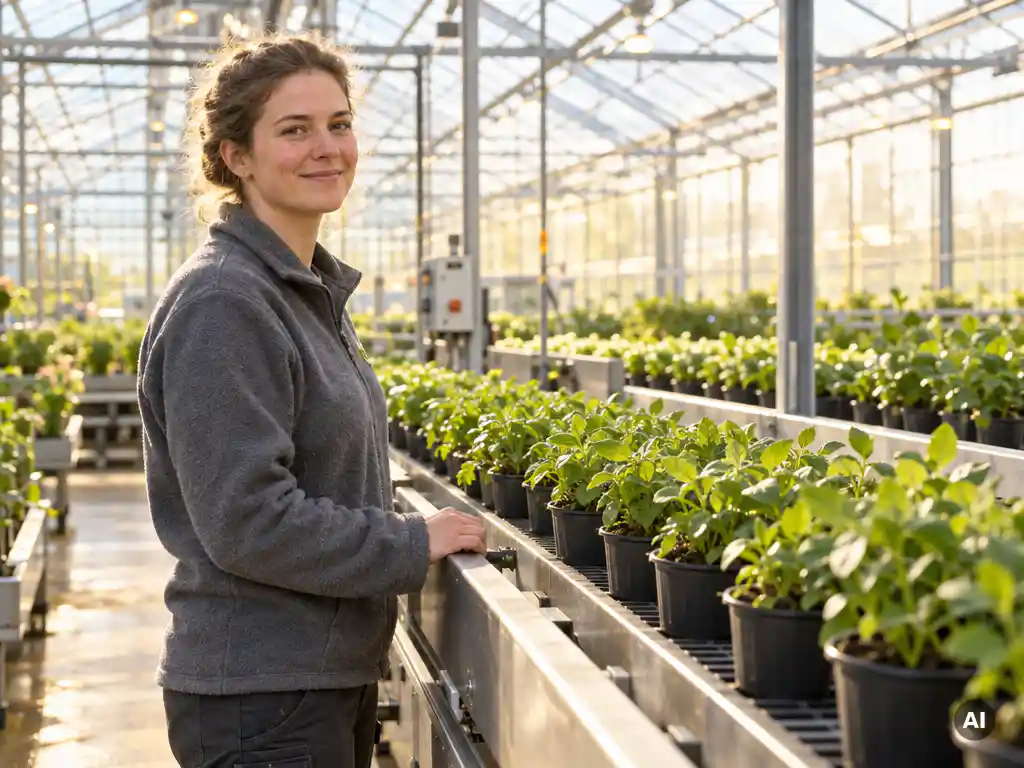
Because our products can be combined with work tables, scales and lighting, a transport line can also double as a processing line. Plants flow past people at a steady, comfortable pace, which raises throughput without raising pressure. If you are curious what this looks like in practice, our range of conveyor belts is a good place to start.
A Step-by-Step Path to Automating
The most practical way to automate is to start small, learn from real use, and grow into fixed systems as the benefits become clear. You do not need a complete overhaul on day one.
Start with the biggest bottleneck
Walk through your process and note where people spend the most time moving product. That spot, often the potting line or the transfer between zones, is usually the best place to begin. A single mobile conveyor belt can already make a visible difference there.
Try before you invest
Renting equipment during a peak period lets you experience the effect on your own floor before committing to a purchase. Many growers begin this way, see how much easier the work becomes, and then expand. It turns a big decision into a series of small, low-risk ones.
Grow toward a fixed system
Once mobile solutions have proven their value, you can move toward fixed, integrated lines that form the backbone of your production process. Because our machines are designed to work together, each step builds on the last rather than replacing it. Hardware, software and installation come from one source, so you are not left coordinating between suppliers.
Pitfalls to Avoid When Automating Your Nursery
The most common pitfalls are automating without a clear picture of the process, choosing disconnected solutions, and underestimating the importance of installation and support. Avoiding them keeps the investment paying off.
One trap is trying to automate everything at once. Without a clear view of where the labor actually goes, it is easy to spend money on the wrong part of the process. Mapping your workflow first, and tackling one bottleneck at a time, keeps the project manageable and the results measurable.
Another is mixing equipment from many suppliers that was never designed to fit together. That often leads to awkward handovers between machines, extra downtime and finger-pointing when something goes wrong. A single partner who handles design, installation and follow-up removes much of that risk.
Finally, do not forget the people. Involve your team early, show them how the new equipment makes their day easier, and give them time to get comfortable with it. Automation works best when staff see it as support rather than a threat.
If you are weighing up where to begin, we are happy to think along with you about your process and your options. You can get in touch with us for advice, and take the first step toward a calmer, more efficient greenhouse in 2026.
Frequently Asked Questions
How do I measure how much labor goes into internal transport in my nursery?
Start by observing one or two typical days and logging how much time each employee spends carrying, shifting, feeding and collecting product versus actually potting, sorting or caring for plants. A simple spreadsheet with tasks, duration and number of people is enough to reveal the biggest time sinks. Repeat the exercise during a seasonal peak, because bottlenecks often look very different when the crew is under pressure.
What is the best first machine to buy if I have a limited budget?
A single mobile conveyor belt placed at your biggest bottleneck, often the potting line or the transfer between zones, is usually the most cost-effective starting point. It requires little installation, delivers visible results quickly and can later be integrated into a larger system. Renting one first is a low-risk way to confirm the return before you buy.
How can I get my team on board with automation?
Involve employees early by asking where they feel the most strain and which tasks they would gladly hand over to a machine. Let them test the equipment during a trial or rental period so they can see for themselves that it makes the day lighter rather than threatening their jobs. Emphasize that the goal is to remove repetitive carrying so people can focus on tasks that need judgment and care.
What if my greenhouse layout is cramped or irregular? Can I still automate?
Yes. Mobile and modular solutions such as movable conveyor belts, buffer tables and roller tracks can be adapted to tight or uneven layouts without major construction work. Sketching your current material flow and discussing it with a supplier helps identify where a compact line can replace long carrying routes. Fixed systems can then be designed around what you learn from the mobile setup.
How do I know if automation is paying off after I implement it?
Set a baseline before you start, such as plants processed per hour, labor hours per batch, sick days and temporary staffing costs. Compare these figures after a few weeks and again after a full season to account for peaks. Improvements in output consistency and employee retention are equally valuable indicators, even though they are harder to put in euros.
Will automating internal transport affect the quality of my plants?
When the equipment is well matched to your product, quality usually improves because plants are handled at a steady, controlled pace and staff are less fatigued. Check that belt speeds, transfer points and buffer tables suit your plant type and tray size, and test with a small batch first. Combining the line with work tables, scales and lighting also makes quality checks easier along the way.
Is it better to buy from one supplier or combine equipment from several?
In most cases a single partner is the safer choice, because hardware, software and installation are designed to work together and there is one point of contact when something needs adjusting. Mixing brands often leads to awkward handovers between machines and slower troubleshooting. If you do already own equipment from other makers, ask the supplier whether it can be integrated before you decide.