

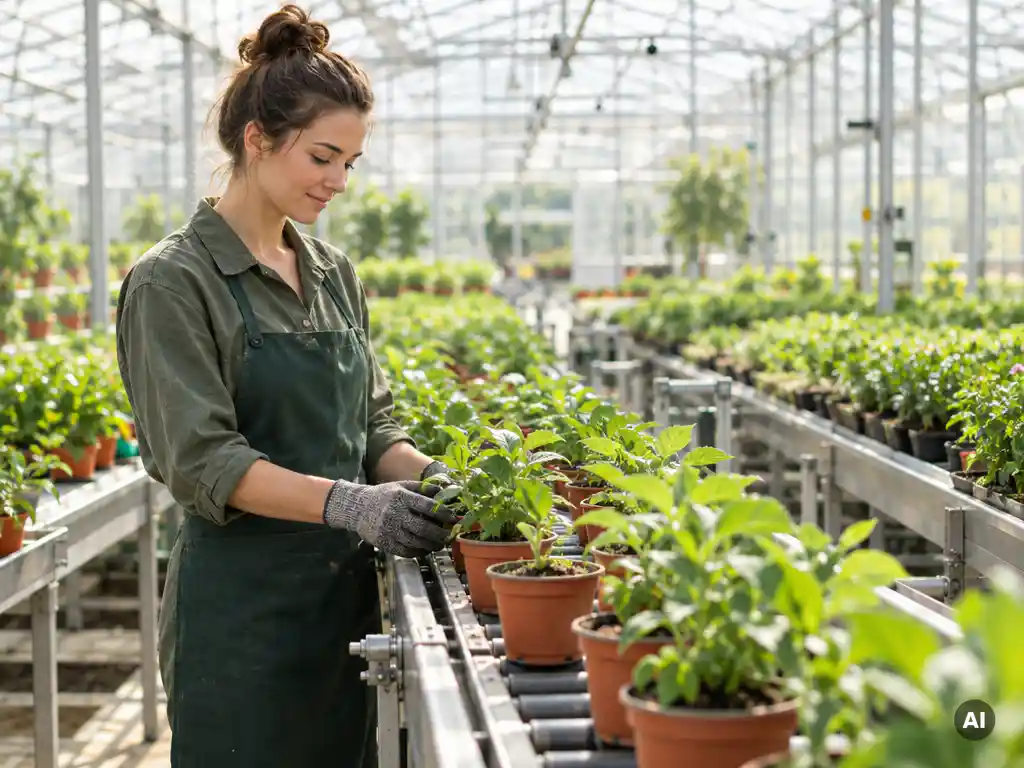
Greenhouse efficiency for family run nurseries that struggle to hire
If you run a family nursery, you probably know the feeling: the order book is full, the plants are growing, and the vacancy you posted in spring is still open in autumn. Hiring has become one of the biggest brakes on growth in horticulture, and wages only move in one direction. Greenhouse efficiency used to be mostly about climate, light and crop planning. Today it is just as much about how many hands it takes to move a pot from A to B.
The good news is that you do not need a giant, risky investment to change this. Many growers get surprisingly far by looking at one thing first: how product moves through the business. Here is a practical, friendly walkthrough of where to look, where to start and how to bring your team along.
Where Labor Hours Quietly Disappear in the Greenhouse
Most lost labor hours hide in repetitive internal transport: carrying trays, pushing carts, lifting pots and walking the same routes dozens of times a day. These tasks rarely feel like a problem because they have always been part of the job, yet they add up to a large share of the payroll.
Try this simple exercise. Follow one batch of plants from the potting area to the shipping dock and note every moment someone lifts, carries, pushes or waits. You will likely find people doing physically heavy work that adds no value to the plant itself. That is also the work that causes sick leave, high turnover and trouble finding seasonal staff.
Once you see the pattern, greenhouse efficiency becomes a very concrete question: which of these movements can a machine do so your people can focus on the tasks that need judgment and care?
Start With Internal Transport, Not Everything at Once
The smartest first step is to automate internal transport, because it removes the most repetitive work with the least disruption to your growing process. You leave your crop, climate and cultivation methods alone and simply change how product travels.
Trying to automate everything at once is where many growers get stuck. The choice feels overwhelming, the budget feels risky and daily operations leave no time to plan. By picking one flow, such as the route between potting and the greenhouse, you get a manageable project with clear before-and-after numbers.
Typical building blocks include conveyor belts, roller conveyors, buffer tables and potting machines. They can be combined and extended with work tables, scales or lighting, so a simple line today can grow into a complete processing line later. If you want to see what is possible, take a look at our range of conveyor belts.
A Step-by-Step Path From Mobile to Fixed Systems
The most reliable route is to begin with flexible, mobile conveyors and grow toward fixed systems once you know exactly where automation pays off. This keeps the first step small and lets the design follow real experience rather than assumptions.
Phase one: mobile conveyors
A mobile belt can be moved between greenhouses, used for different crops and put to work within a day or two. It is a low-threshold way to find out how much walking and lifting disappears, and how your team feels about working with it. Growers often discover use cases they had not planned for.
Phase two: fixed lines and integration
When the benefits are clear, you can move toward permanent installations that connect potting, buffering, watering and transport into one flow. At that point, the routes are proven, the layout is based on real daily use and the investment has far less uncertainty. This is also where having hardware, software and installation come from one partner saves a lot of coordination and avoids gaps between suppliers.
Try Before You Invest: Renting Automation First
Renting equipment lets you experience automation in your own greenhouse before committing to a purchase. For a family business where every euro counts, that changes the decision from a leap of faith into a practical trial.
Renting works especially well during peak season. Instead of hiring and training yet another round of temporary workers, you add a machine for the busiest weeks and compare the results with previous years. Many growers who start this way later build toward a fully automated line, one step at a time.
The trial also answers questions no brochure can: does the layout work, how does the team respond, and how much capacity is really freed up? With those answers in hand, you invest based on your own numbers.
Real Results: From 26 to 6 FTE
Well-planned automation of internal transport can dramatically reduce staffing needs for the same output. One of our customers went from 26 FTE to just 6 FTE while keeping production at the same level.
That kind of change does not come from a single machine. It comes from looking at the whole flow, removing manual handling where it makes the least sense and connecting the steps so product keeps moving. The remaining team members are not simply “left over”; they take on supervision, quality control and planning, which are more engaging roles.
Every nursery is different, so results will vary with crop, layout and current processes. Still, the example shows what is possible when transport is treated as a system rather than a collection of manual tasks, and why labor savings and healthier margins often arrive together.
Getting Your Team Ready for Automation
Automation works best when the people on the floor understand it, help shape it and see what is in it for them. Explaining early that the goal is to remove heavy, repetitive work, not to replace good colleagues, builds trust from the start.
A few habits help the transition go smoothly:
- Involve your most experienced team members when choosing where the first machine goes.
- Start small with a mobile or rented solution so everyone can get comfortable.
- Provide short, hands-on training rather than long manuals.
- Collect feedback after the first weeks and adjust the setup together.
Fewer injuries, less fatigue and a more attractive workplace also make it easier to keep the staff you already have and recruit new people. If you are curious where automation could make the biggest difference in your own greenhouse, we are happy to think it through with you. Get in touch with us and we will look at your flow together, no strings attached.
Frequently Asked Questions
How do I figure out which transport flow to automate first in my nursery?
Follow one batch of plants from potting to shipping and log every lift, carry, push and wait, including how many people and minutes each step takes. The flow with the most repetitive handling and the highest number of labor hours per day is usually your best starting point. Choose one with a clear before-and-after measurement, such as the route between the potting area and the greenhouse.
How much space do I need in my greenhouse to install conveyors or other automation?
It depends on your layout, but mobile conveyors are designed to fit into existing aisles and can be moved between greenhouses, so they need very little planning. For fixed lines, map your current walking and cart routes first and check where paths, buffer tables and work stations can be combined. A supplier can usually advise on the layout during a site visit so you don’t have to redesign your greenhouse.
How do I measure whether automation is actually paying off?
Record a baseline before you start: labor hours per batch, number of people involved, throughput per day and sick leave or overtime linked to the task. After a few weeks of using the machine, repeat the same measurements and compare them. Also include softer indicators like how easily you fill seasonal positions and feedback from your team.
What if my team is worried that automation will cost them their jobs?
Be open from the start that the aim is to remove heavy, repetitive work and free people for tasks like quality control, supervision and planning. Involve experienced employees in choosing where the first machine goes and let them test a mobile or rented unit. When people see their workday getting lighter, resistance usually turns into support.
Is renting automation equipment only worthwhile during peak season?
Peak season is the most obvious use because it replaces another round of temporary hiring and training, but renting also works as a trial at any time of year. It lets you test layouts, check capacity gains and see how your team responds before committing to a purchase. If the results are good, you can use your own numbers to plan a permanent investment.
What are common mistakes when starting with greenhouse automation?
The most common mistake is trying to automate everything at once, which makes the budget feel risky and the project hard to manage. Others include skipping the flow analysis, designing a fixed line before testing real use, and not training the team with short, hands-on sessions. Starting small with a mobile or rented conveyor and expanding step by step avoids most of these problems.
Can a simple conveyor setup be expanded later into a full processing line?
Yes. Conveyor belts, roller conveyors, buffer tables and potting machines can be combined and extended with work tables, scales or lighting. This means a basic line today can grow into a connected system for potting, buffering, watering and transport as your needs and confidence grow. Working with one partner for hardware, software and installation helps keep the expansion consistent.