
Greenhouse efficiency in peak season without paying for extra agency staff
Where Peak Season Labor Hours Really Disappear
Most peak season labor is lost to moving plants rather than growing them. Walking carts down long aisles, loading and unloading trolleys, and shuffling trays between potting, watering, and packing all consume hours that add no value to the plant itself.
These losses are easy to overlook because they are spread across the whole team. One person spends an hour here, another spends two there, and nobody notices that a large share of the workday goes to transport. A simple exercise helps: follow a single batch of plants from potting to dispatch and note every time a person has to touch, lift, or push it.
Physical strain makes the problem worse. Heavy, repetitive handling leads to absence and turnover, which means you lose experienced people just when you need them most. Fixing the flow of materials therefore improves efficiency and makes the work more attractive to the staff you already have.
Automating Internal Transport to Cut Seasonal Staffing
Automating internal transport reduces seasonal staffing because machines take over the movement of plants, so fewer people are needed to keep the line running. Instead of hiring extra hands to carry and push, you let the equipment do the repetitive part while your team focuses on tasks that need judgment.
What automated transport looks like in practice
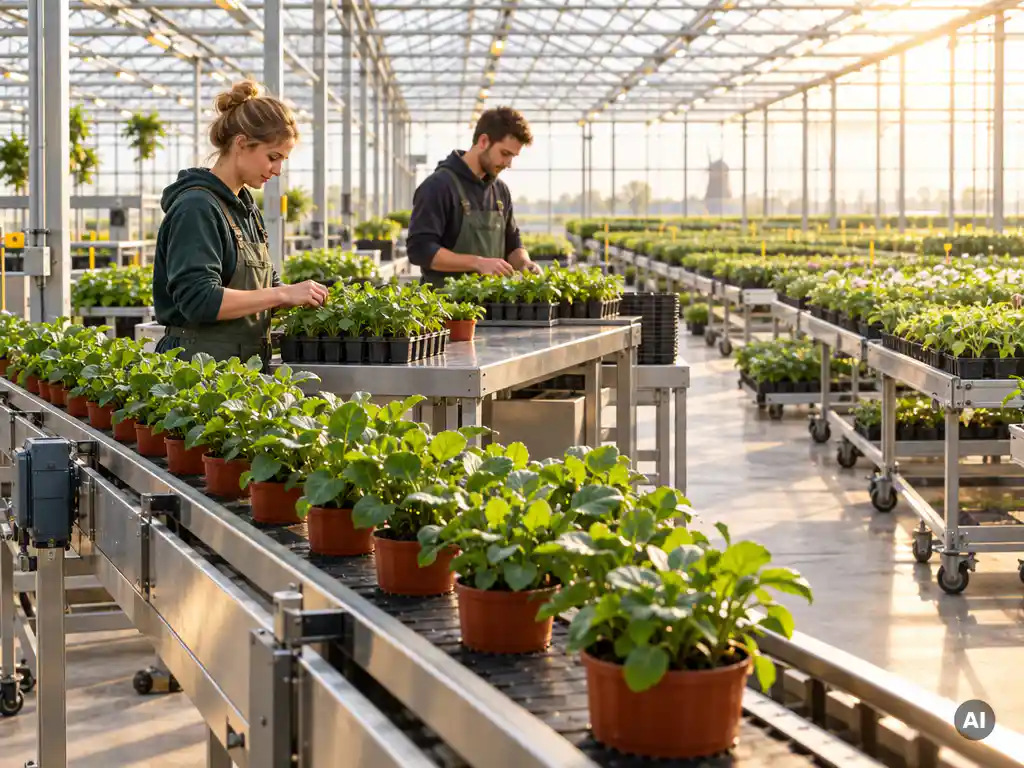
In a typical setup, transport belts carry plants between workstations, buffer tables smooth out the pace between steps, and potting machines and watering stations handle the repetitive jobs along the line. These components combine freely, and you can add work tables, scales, and lighting where your process calls for them.
We build these machines ourselves in De Lier, and after more than three decades in horticulture we know how a greenhouse floor really works. That experience shapes how we design lines that are ergonomic, durable, and easy to extend as your operation grows.
The impact on headcount
When transport is automated, the same output requires far fewer people. Some of our customers have gone from 26 to 6 FTE for the same output, which shows how much of a traditional line is simply moving product from A to B. Not every business will see a change that dramatic, but even a modest reduction in manual handling noticeably lowers the number of agency workers needed at peak.
Start Small With Mobile Belts and Rental
You do not need a fully automated facility to see results. Starting with a mobile belt is the lowest-risk way to test automation, because it can be positioned where the bottleneck is and moved when your needs change.
Renting adds another layer of safety. Many growers rent equipment for a single peak period, experience the time savings firsthand, and only then decide what to invest in. That turns automation from a leap of faith into a practical trial with real numbers behind it.
From there, the path is gradual. A mobile belt can grow into a fixed system, with additional modules added step by step as the benefits prove themselves and as budget allows. This approach keeps the pressure off and lets your team get comfortable with the new way of working.
Planning the Switch Before the Next Peak
The best time to prepare for peak season is well before it starts. Installing and fine-tuning a line in a quiet period means your team can learn the equipment without the stress of full order books.
Begin by mapping your busiest weeks and the exact points where the line slows down or relies on extra hands. Those bottlenecks tell you where a belt, buffer table, or watering station will pay back fastest. It also helps to involve the people who work the line every day, since they know where time is lost better than anyone.
Allow time for layout decisions, installation, and a short training round. With hardware, software, and installation coming from a single supplier, coordination stays simple and the schedule stays predictable. If you are working out where to begin, our team is glad to think it through with you to find the right first step for your greenhouse.
Turning Labor Savings Into Healthier Margins
Labor savings improve margins in two ways: they cut the direct cost of wages and agency fees, and they raise output per person. Together, these effects make a business less sensitive to wage increases and labor shortages.
The benefits reach beyond the payroll line. Fewer manual handling steps usually mean fewer mistakes and less damaged product, and a more ergonomic workplace supports lower absence and steadier retention. A calmer, more predictable peak season also frees up management time that was previously spent on recruiting and scheduling.
Looking ahead to the next few seasons, labor is unlikely to get cheaper or easier to find. Growers who start automating now, even with a single mobile belt, build a cost base that stays under control while competitors keep paying for extra agency staff. Every peak season you get through with fewer people and more output makes the next one easier to face.
Frequently Asked Questions
How do I figure out which part of my greenhouse line to automate first?
Follow one batch of plants from potting to dispatch and note every point where someone has to lift, push, or carry it. Then compare that with your busiest weeks to see where you rely on extra hands. The step with the most manual handling or the longest queue is usually where a transport belt or buffer table will pay back fastest.
How early should I start preparing if I want automation in place before next peak season?
Plan to start well before the busy period, ideally during a quiet season. You need time for layout decisions, installation, fine-tuning, and a short training round for your team. Installing in a quiet period means your staff can learn the equipment without the pressure of full order books.
Is renting a mobile belt really a realistic way to test automation?
Yes. Many growers rent equipment for a single peak period to see the time savings firsthand before investing. Place the belt at your biggest bottleneck, track hours worked and output before and during the rental, and use those numbers to decide whether and how to expand.
What if my greenhouse layout is irregular or space is limited?
Automation does not require a perfect, purpose-built facility. Mobile belts can be positioned where they are needed and moved as your needs change, and components like belts, buffer tables, and work tables can be combined freely. Sharing your floor plan and workflow with the supplier early on helps them design a line that fits your space.
How do I get my team on board with the change?
Involve the people who work the line every day from the start, since they know best where time is lost. Emphasize that automation takes over the heavy, repetitive walking and lifting so they can focus on tasks that require judgment. A short training round and a gradual rollout also help staff get comfortable with the new way of working.
Will automation actually reduce my need for agency staff, or just shift the work?
When transport is automated, the same output needs fewer people because machines handle moving product from A to B. Results vary by operation, ranging from a modest reduction in manual handling to dramatic cases such as going from 26 to 6 FTE for the same output. Even a small reduction typically lowers the number of agency workers you need at peak.
Can I expand the system later as my business grows?
Yes. A common path is to start with a mobile belt and grow into a fixed system, adding modules such as buffer tables, potting machines, watering stations, scales, or lighting step by step. This keeps the investment manageable and lets you add equipment only as the benefits prove themselves and your budget allows.