

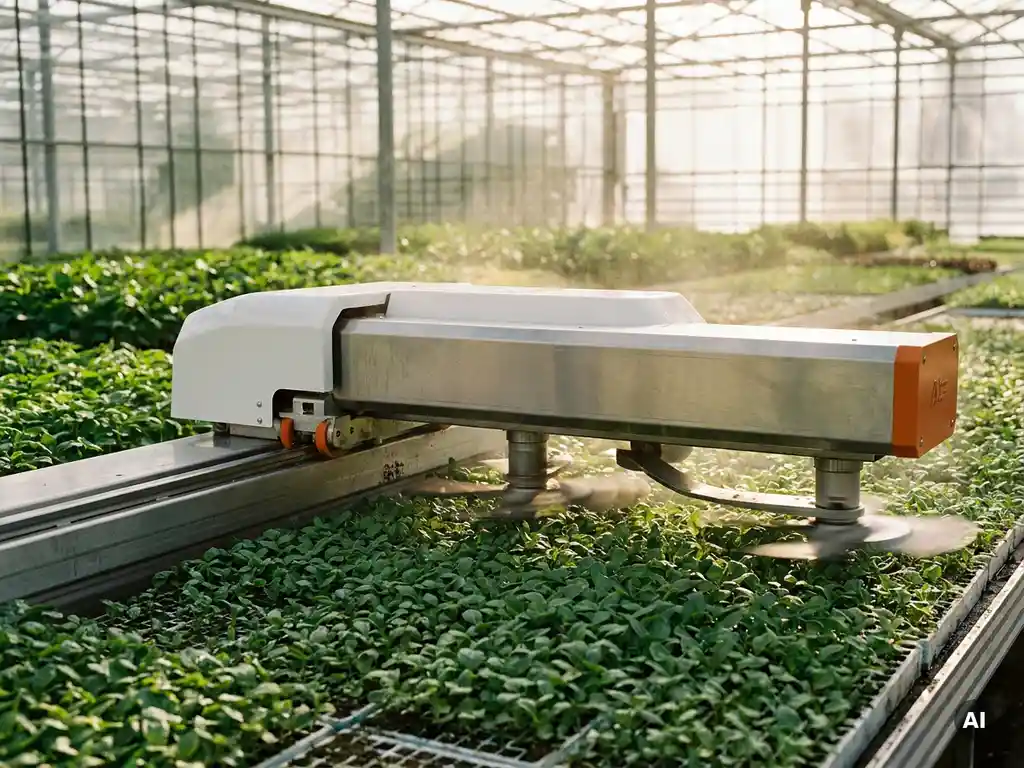
How can a topping machine reduce repetitive work for nursery employees?
A potting machine reduces repetitive work for nursery employees by automating the most physically demanding steps in the potting process: filling pots with soil, compressing the mix to the right density, and moving pots along the line. Instead of bending, scooping, and pressing by hand for hours at a stretch, workers can focus on oversight and quality control. The sections below cover everything from ergonomics to machine selection.
What types of repetitive tasks does manual potting involve?
Manual potting involves a cycle of physically identical actions repeated thousands of times per shift: scooping soil from a bin, filling each pot by hand, compressing the mix to achieve consistent density, and placing the filled pot onto a trolley or conveyor. Each individual action is low-effort in isolation, but the cumulative strain across a full working day is substantial.
The most problematic tasks from a repetition standpoint include:
- Bending and reaching to access soil bins or stack filled pots at ground level
- Gripping and scooping heavy or wet soil mixes repeatedly throughout the shift
- Pressing and tamping soil to achieve uniform density in every pot
- Carrying and placing filled pots onto transport systems or trolleys
- Keeping pace with the line during seasonal peaks when output targets spike
The consistency problem compounds the physical one. No two employees tamp soil with exactly the same force, which leads to variation in pot density. That variation directly affects plant quality and shelf life, a hidden cost that goes beyond the physical toll on the team.
How does a potting machine automate the most labour-intensive steps?
A potting machine automates the core potting cycle by taking over soil filling, compaction, and pot movement entirely. An operator places empty pots at the infeed; the machine fills them with a measured, consistent volume of soil, presses the mix to a preset depth, and feeds the filled pots onto the outfeed conveyor. The entire cycle runs continuously without manual intervention at each pot.
Modern machines use PLC controls to manage soil feed rates, drill depth, and conveyor speed simultaneously. This means the machine is not simply faster than a person, it is also more consistent. Every pot receives the same soil volume at the same compaction level, regardless of how long the shift has been running or how tired the team is. During peak season, that consistency is what protects crop quality when volumes are highest and margins for error are smallest.
The automation also restructures how the workforce is deployed. Rather than needing several people at the potting bench, a single operator can oversee the machine while others handle upstream supply or downstream sorting and transport. Fewer people are tied to the most physically demanding station on the floor.
What are the ergonomic benefits of using a potting machine in a nursery?
The primary ergonomic benefit of a potting machine is the elimination of sustained, repetitive strain on the hands, wrists, shoulders, and lower back. The scooping, pressing, and carrying actions that cause cumulative injury over a season are removed from the operator’s role entirely. Workers at a mechanised potting line are typically standing at a comfortable working height, monitoring flow rather than performing the same physical movement thousands of times.
Secondary ergonomic gains include:
- Reduced bending because the machine handles soil at a fixed, adjustable working height
- Lower noise levels in newer models, reducing auditory fatigue during long shifts
- Decreased physical fatigue at the end of the day, which improves both safety and sustained output quality
- Better workforce retention because physically demanding roles become less punishing over time
For nurseries that rely on seasonal labour, ergonomic improvements also have a practical business dimension. Workers who are less fatigued make fewer mistakes, call in sick less often, and are more likely to return the following season. The machine investment pays back partly through workforce stability, not only through speed.
Can a potting machine handle different soil mixes and pot sizes?
Yes, a well-designed potting machine can handle a wide range of soil mixes and pot sizes, provided it is configured correctly for the specific growing operation. The key variables are the machine’s auger design, feed mechanism, and the adjustability of its drill depth and conveyor width.
Heavier or coarser mixes, including peat alternatives, bark-based substrates, or mixes with added perlite, can cause jamming or inconsistent filling in machines that are not designed for them. This is one of the most common complaints growers have about entry-level machines: they perform well with standard potting compost but struggle under real-world conditions where the mix changes by season or crop type.
Our Stolze 3030 and 3030 PRO are built to handle demanding soil mixes reliably. The 3030 PRO adds automatic soil detection, which continuously adjusts filling behaviour based on the actual material in the hopper rather than relying on fixed settings. For pot sizes, both machines accommodate pots from 7 to 30 cm, and settings for different pot diameters, drill depths, and feed speeds can be programmed and saved via the touchscreen, making changeovers between pot sizes fast and repeatable.
What is the difference between a standard potting machine and a PRO model?
The key difference between a standard potting machine and a PRO model is the level of automation and precision built into the filling process. A standard machine operates on fixed, manually set parameters: the operator sets the drill depth and feed speed, and the machine runs those settings consistently. A PRO model adds intelligent features that adapt to real conditions during operation.
Standard model: reliable, straightforward automation
The Stolze 3030 is a robust, PLC-controlled machine with an intuitive touchscreen. It runs single, double, or alternating configurations, handles pots from 7 to 30 cm, and reaches a capacity of up to 8,000 pots per hour. It is the right choice for nurseries with consistent soil mixes and a well-defined range of pot sizes. Settings are programmable and repeatable, which already represents a major step up from manual potting in terms of consistency and speed.
PRO model: adaptive precision for demanding environments
The Stolze 3030 PRO adds automatic soil detection, which monitors the actual fill level in real time and adjusts the feed accordingly. This is particularly valuable when soil mix density varies within a batch or when switching between substrates. The PRO also runs more quietly, requires less maintenance, and uses a fully guided chain for greater mechanical stability. For nurseries running high volumes across multiple soil types, or those where machine downtime carries a high cost, the PRO’s additional intelligence typically justifies the investment.
Should a nursery buy or rent a potting machine?
Whether to buy or rent a potting machine depends on the volume you need to process, the consistency of that demand across the year, and your appetite for capital investment. Buying makes sense for nurseries with year-round or high-season potting volumes that justify the asset on the balance sheet. Renting is a practical route for operations with short, intense peaks or for those evaluating a machine before committing to a purchase.
Renting also removes the risk of buying the wrong machine. If you are unsure whether the standard model or the PRO fits your workflow, a rental period lets you test under real conditions with your actual soil mix and pot sizes before making a long-term decision. This is especially useful for growers upgrading from an older machine who want to verify performance before replacing it.
The total cost of ownership calculation should include not just the purchase price but also maintenance, downtime risk, and the labour savings the machine generates. A machine that processes 8,000 pots per hour and replaces two or three manual workers at the bench typically reaches its payback point faster than the headline price suggests.
How MartinStolze helps reduce repetitive potting work
We design and build our potting machines entirely in-house at our facility in De Lier, from engineering and programming through to assembly, installation, and after-sales support. That means every machine is built with the practical realities of professional nursery production in mind, not adapted from a generic design. Here is what working with us looks like in practice:
- Complete machine range: The Stolze 3030 and 3030 PRO cover the full spectrum from straightforward automation to adaptive, high-precision filling
- Seamless integration: Our potting machines connect directly with our transport conveyors and sorting lines for a fully automated production flow
- Buy or rent: Both options are available, including trial periods so you can test before you commit
- Training and support: We train your team in operation and maintenance at our own demo and training facility in De Lier
- Our own technicians: Installation and ongoing service are handled by our own engineers, not third-party contractors
If you are ready to reduce the physical burden on your team and bring more consistency to your potting line, get in touch with us and we will help you find the right configuration for your operation.
Frequently Asked Questions
How long does it typically take to install a potting machine and get it running in a nursery?
Installation timelines vary depending on the complexity of the line and how it integrates with existing conveyors and sorting equipment, but most nurseries are up and running within one to two days. MartinStolze handles installation with its own engineers rather than third-party contractors, which keeps the process efficient and ensures any adjustments are made on the spot. Operator training is included and takes place at the De Lier facility or on-site, so your team is confident running the machine from day one.
What happens if the potting machine breaks down during peak season?
This is one of the most important practical concerns for any nursery investing in automation, and it is worth factoring into your machine selection from the start. MartinStolze machines are serviced by the company's own technicians, meaning you are not waiting on a third-party contractor to diagnose or source parts. The 3030 PRO is also engineered for lower maintenance requirements and greater mechanical stability, which directly reduces the likelihood of unplanned downtime when output pressure is highest.
How do I know whether the Stolze 3030 or the 3030 PRO is the right fit for my operation?
The clearest indicator is the variability of your soil mixes and the cost of inconsistency in your production. If you run a single, well-defined substrate and a consistent range of pot sizes, the standard 3030 delivers reliable, repeatable automation at a strong price point. If your mix changes between batches or seasons, or if machine downtime during peak periods carries a significant financial cost, the 3030 PRO's automatic soil detection and enhanced mechanical stability typically justify the additional investment. Renting before buying is a practical way to test which model performs best under your actual conditions.
Can a potting machine be integrated into an existing production line, or does the whole setup need to be replaced?
In most cases, a potting machine can be integrated into an existing production setup without requiring a complete overhaul. The key is ensuring compatible infeed and outfeed connections, which typically means aligning conveyor heights, widths, and speeds with the new machine. MartinStolze designs its potting machines to connect directly with its own transport conveyors and sorting lines, and its engineers assess integration requirements during the installation process to minimise disruption to your existing workflow.
What maintenance does a potting machine require, and can nursery staff handle it themselves?
Routine maintenance on a potting machine typically includes cleaning soil residue from the auger and hopper, checking conveyor chain tension, and inspecting wear parts such as brushes and seals at regular intervals. Most of these tasks are straightforward and can be carried out by trained nursery staff without specialist tools. MartinStolze includes maintenance training as part of the setup process, and its own technicians are available for scheduled servicing or any issues that go beyond routine upkeep.
Is a potting machine a practical investment for a smaller nursery, or is it mainly suited to large-scale operations?
Potting machines are not exclusively for large-scale growers. Smaller nurseries often see a strong return on investment precisely because they are most exposed to the hidden costs of manual potting: inconsistent soil density, physical fatigue affecting quality late in the shift, and difficulty scaling output during seasonal peaks. The rental option lowers the barrier to entry significantly, allowing smaller operations to access the benefits of automation without a large upfront capital commitment, and to evaluate the payback before deciding on a purchase.
How does automating the potting process affect the number of staff needed on the nursery floor?
Automation does not necessarily reduce total headcount, but it restructures how staff are deployed. With a potting machine handling filling, compaction, and pot movement, fewer people are needed at the potting bench itself, freeing team members to focus on upstream tasks like substrate preparation or downstream work like sorting, labelling, and transport. This reallocation tends to improve overall line efficiency and reduces the physical toll on the workforce, which has a measurable impact on fatigue-related errors and long-term staff retention.
Related Articles
- How do you prevent wasting substrate when topping thousands of pots?
- Can a potting machine have too much capacity for your production line?
- How long does it take to pot 25,000 plants with an automated potting machine?
- Which production step determines your actual pots per hour?
- How many pots per hour can a modern potting machine handle?