

How do sensors help control an automatic topping machine?
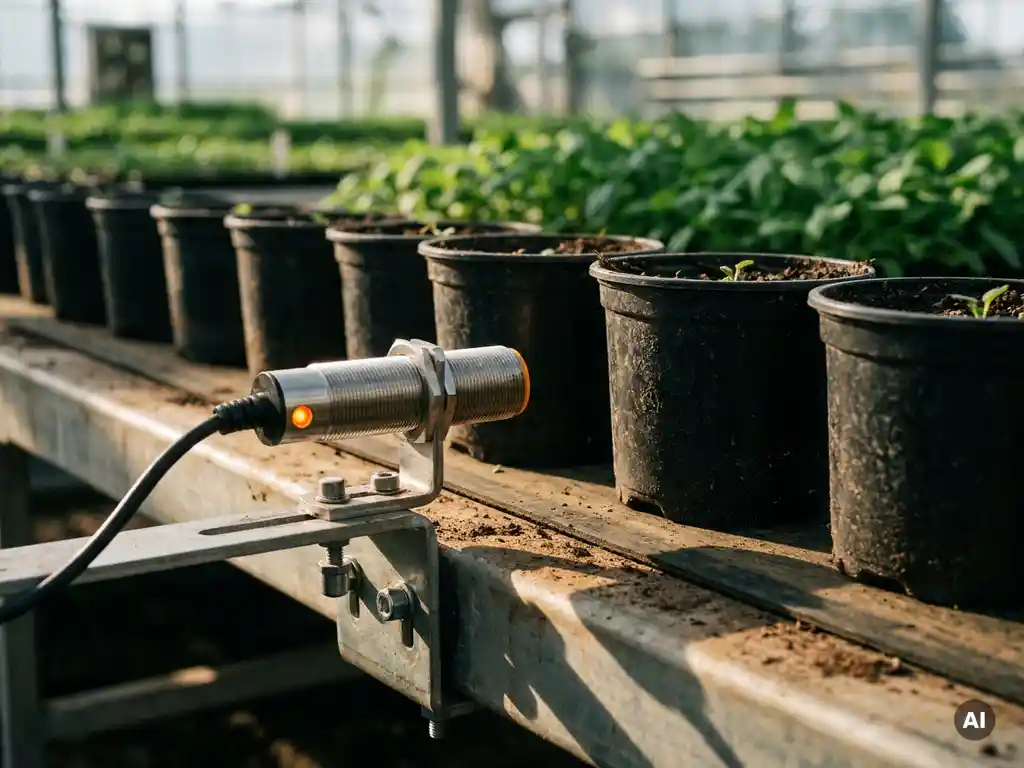
Sensors help control an automatic topping machine by detecting soil levels, monitoring pot positions, and triggering precise filling sequences in real time. They act as the machine’s nervous system, ensuring every pot receives a consistent amount of growing medium regardless of operator input. The sections below unpack exactly how each type of sensor contributes to that process.
What types of sensors are used in automatic topping machines?
Automatic topping machines typically use a combination of proximity sensors, optical sensors, and pressure or weight sensors. Proximity sensors detect the presence and position of pots on the conveyor. Optical sensors measure soil levels in the hopper and filling chamber. Together, these sensor types allow the machine to react dynamically to what is happening on the line at any given moment.
Each sensor type handles a specific part of the process. Proximity sensors confirm that a pot has arrived at the correct position before the filling cycle begins, preventing wasted soil or missed pots. Optical sensors continuously scan the volume of growing medium available, signalling the system when the hopper needs refilling. In more advanced machines, capacitive sensors can distinguish between different soil compositions, which is especially useful when working with peat-heavy or coarse substrate mixes that behave differently during transport and compression.
The combination of these technologies means the machine does not rely on fixed timers or manual adjustments to compensate for variation. Instead, it reads the actual state of the line and responds accordingly, which is the foundation of reliable automated potting.
How does soil detection work in a topping machine?
Soil detection in a topping machine works by using optical or capacitive sensors positioned at key points in the filling path. These sensors measure whether sufficient growing medium is present before and during the filling cycle. When the sensor confirms the correct volume, it releases the soil into the pot. If the level is insufficient, the system pauses or triggers a refill alert before continuing.
In practice, the sensor beam is aimed at the soil column just above the pot opening. As the growing medium falls, the sensor reads whether the column is full, partial, or absent. This reading happens in milliseconds, allowing the machine to make real-time corrections without slowing the overall throughput. On machines equipped with automatic soil detection, such as the Stolze 3030 PRO, this process runs continuously and without manual intervention, which is particularly valuable during long production runs where operator attention naturally fluctuates.
The soil detection system also accounts for the inconsistent flow behaviour of different substrate types. Coarse mixes with bark or perlite do not flow as smoothly as fine peat, and a sensor-driven system can detect these irregularities and adjust the feed rate before they cause a blockage or underfill.
Why does sensor accuracy affect pot density and quality?
Sensor accuracy directly determines how consistently each pot is filled, which in turn controls pot density and overall crop quality. If a sensor misreads the soil volume, even by a small margin, some pots receive too little growing medium and others too much. This variation leads to uneven root development, inconsistent watering requirements across a batch, and ultimately a less uniform end product for the auction or retailer.
For professional growers producing thousands of pots per shift, small inaccuracies compound quickly. A sensor that is even slightly out of calibration can result in hundreds of underfilled pots before anyone notices. Underfilled pots dry out faster, require different irrigation schedules, and often fail quality checks at the point of sale. Overfilled pots waste substrate and can cause drainage problems that affect plant health.
High-accuracy sensors eliminate this variability by taking readings at a frequency that matches the machine’s speed. The faster the line runs, the more critical sensor precision becomes. This is why investing in a machine with reliable, well-calibrated sensors pays back in reduced substrate waste, more consistent plant quality, and fewer rejections further down the supply chain.
What happens when a sensor detects an error during potting?
When a sensor detects an error during potting, the machine triggers an immediate response, which can range from a warning signal to a full line stop, depending on the severity of the fault. Common error triggers include an empty hopper, a misaligned pot, a blocked filling head, or a sensor reading that falls outside the programmed tolerance range. The system logs the fault and alerts the operator so the issue can be resolved quickly.
The response is designed to protect both the machine and the quality of the batch. A line stop caused by a sensor alert is far preferable to running several hundred pots through a faulty cycle without anyone noticing. Once the operator has resolved the underlying issue, the machine can resume from where it stopped, minimising waste and downtime.
On machines with touchscreen control panels, the error message appears directly on the screen with a description of the fault and, in many cases, a suggested action. This removes guesswork and reduces the time a trained operator needs to diagnose and fix the problem. The faster the response, the shorter the interruption to production, which matters most during peak season when throughput is under pressure.
How do sensors integrate with the touchscreen control panel?
Sensors integrate with the touchscreen control panel through the machine’s PLC (programmable logic controller), which acts as the central processor. Every sensor reading feeds into the PLC in real time, and the touchscreen displays this data in a readable format for the operator. This means the operator can see the machine’s status, active alerts, and current production parameters all from one interface without opening any housing or checking physical gauges.
The touchscreen also allows operators to set the tolerance thresholds that sensors use to judge whether a reading is acceptable. For example, an operator can define the minimum and maximum acceptable soil volume for a specific pot size, and the sensor system will flag anything outside that range. When switching between pot sizes or substrate types, these settings can be saved as programmes and recalled instantly, which saves setup time and reduces the risk of human error during changeovers.
This integration makes the machine genuinely user-friendly for operators who are not technically trained. Rather than interpreting raw sensor data, they see clear status indicators and plain-language alerts. The result is faster decision-making on the production floor and a shorter learning curve for new staff.
Do sensors reduce maintenance needs on a topping machine?
Yes, sensors reduce maintenance needs on a topping machine by detecting problems early, before they cause mechanical wear or damage. When a sensor identifies an irregular reading, such as unusual vibration, a blocked feed, or a misaligned component, the system alerts the operator before the issue escalates. Catching faults at this stage prevents the kind of unplanned breakdowns that require costly repairs and extended downtime.
Beyond fault detection, sensors also reduce wear by ensuring the machine only operates when conditions are correct. A filling cycle that runs without a pot in position, for example, puts unnecessary stress on moving parts and wastes substrate. Sensors prevent this by confirming pot presence before each cycle begins. Over thousands of cycles per shift, this kind of precision adds up to meaningfully less mechanical strain on the machine.
Machines with fully guided chains and automatic soil detection, like the Stolze 3030 PRO, combine sensor intelligence with mechanical design to further reduce the frequency of maintenance interventions. Quieter operation and fewer abrupt stops or restarts also contribute to longer component life. The overall effect is a machine that requires less reactive maintenance and more predictable, scheduled servicing, which is much easier to plan around a busy growing season.
How Martin Stolze helps with sensor-driven potting automation
At Martin Stolze, we design and build our potting machines entirely in-house, which means the sensor systems, PLC programming, and touchscreen interfaces are all developed and tested as a single integrated solution. There are no compatibility gaps between components, and our own engineers understand the full system from the ground up. Here is what that means in practice for your operation:
- Automatic soil detection on the Stolze 3030 PRO ensures consistent pot density without manual adjustment, even across long production runs
- Touchscreen programming lets you save settings per pot size and substrate type, so changeovers are fast and error-free
- Fully guided chain mechanism combined with sensor feedback reduces mechanical stress and lowers maintenance frequency
- Real-time error alerts displayed on the screen help operators respond immediately, keeping downtime to a minimum during peak season
- Seamless integration with our conveyor systems means sensors communicate across the entire potting line, not just within the machine itself
- Both purchase and rental options are available, including a trial period, so you can experience the sensor-driven performance before committing
Whether you are replacing an ageing machine or building a new potting line from scratch, we are here to help you find the right configuration for your specific crop, substrate, and production volume. Get in touch with our team and we will walk you through the options that make the most sense for your operation.
Frequently Asked Questions
How often should sensors on an automatic topping machine be calibrated?
Sensors should typically be checked and recalibrated at the start of each growing season and whenever you switch to a significantly different substrate type. Signs that recalibration is needed include a gradual increase in underfilled or overfilled pots, more frequent error alerts, or visible inconsistency in pot density across a batch. Most modern machines with touchscreen interfaces allow calibration to be performed directly through the control panel without requiring specialist tools or engineer visits.
Can sensors on a topping machine handle different pot sizes without manual reconfiguration?
Yes, on machines with programmable touchscreen controls, sensor thresholds and tolerance ranges can be saved as separate programmes for each pot size or substrate type. When switching between configurations, the operator simply recalls the saved programme rather than manually adjusting individual sensor settings. This not only saves setup time during changeovers but also eliminates the risk of human error when re-entering parameters under time pressure.
What is the biggest mistake growers make when it comes to sensor maintenance on potting machines?
The most common mistake is neglecting routine sensor cleaning, particularly on optical sensors that can accumulate dust, soil particles, or moisture over time. A dirty sensor lens can cause false readings, missed detections, or unnecessary error alerts that slow production. A simple cleaning schedule — wiping sensor faces with a dry cloth at the start or end of each shift — is usually enough to prevent the majority of sensor-related issues.
Are sensor-driven topping machines suitable for smaller growing operations, or are they only cost-effective at high volumes?
Sensor-driven machines deliver value at a range of production scales, not just high-volume operations. Even at lower throughput, the substrate savings from consistent fill accuracy, combined with fewer rejects and a more uniform end product, can offset the investment relatively quickly. For smaller operations where upfront cost is a concern, rental options with a trial period offer a practical way to experience the performance benefits before committing to a purchase.
What should I do if my topping machine keeps triggering sensor errors even after the issue appears to be resolved?
Persistent or recurring sensor errors after an apparent fix usually point to one of three causes: a sensor that is physically misaligned, a tolerance threshold that is set too tightly for the substrate being used, or an underlying mechanical issue such as an inconsistent conveyor speed that creates readings outside the expected range. Start by checking the sensor's physical position and cleaning the sensor face, then review the tolerance settings in the control panel. If errors continue, contact your machine supplier's technical team, as recurring faults are often resolved quickly once the root cause is identified remotely or on-site.
How do sensors on the topping machine communicate with sensors on connected conveyor systems?
On fully integrated potting lines, sensors across the topping machine and connected conveyor systems feed into a shared PLC, allowing the entire line to respond as a single coordinated system rather than a series of independent machines. This means, for example, that a pot jam detected on the conveyor can trigger a controlled pause in the topping machine before any underfilled pots are produced. This line-wide communication is one of the key advantages of sourcing your topping machine and conveyor systems from the same manufacturer, as integration is built in rather than retrofitted.
Is it possible to upgrade the sensors on an older topping machine, or is it better to invest in a new machine?
Sensor upgrades are sometimes possible on older machines, but compatibility with the existing PLC and control interface is the critical factor. If the machine's controller is outdated, adding modern sensors may require a broader electrical upgrade that approaches or exceeds the cost of a newer machine. A practical first step is to have your current machine assessed by a specialist who can tell you whether targeted sensor improvements will deliver meaningful performance gains, or whether the overall system architecture is the limiting factor.