
How do you automate internal transport in a distribution center?
Distribution centers face constant pressure to move goods faster, with fewer errors and lower labor costs. Internal transport is often the bottleneck that holds everything back, and automation is increasingly the answer. Whether you manage a horticultural distribution center or a packaging facility, understanding how conveyor belt systems work and how to implement them effectively can transform your daily operations.
This guide answers the most common questions about automating internal transport in a distribution center, from the basics of what it involves to the practical steps for choosing the right system for your specific situation.
What is internal transport automation in a distribution center?
Internal transport automation in a distribution center is the use of mechanical systems, such as conveyor belts, roller tracks, and buffer tables, to move products through a facility without manual carrying or pushing. Instead of employees physically transporting goods from one workstation to the next, automated systems handle the flow continuously and consistently.
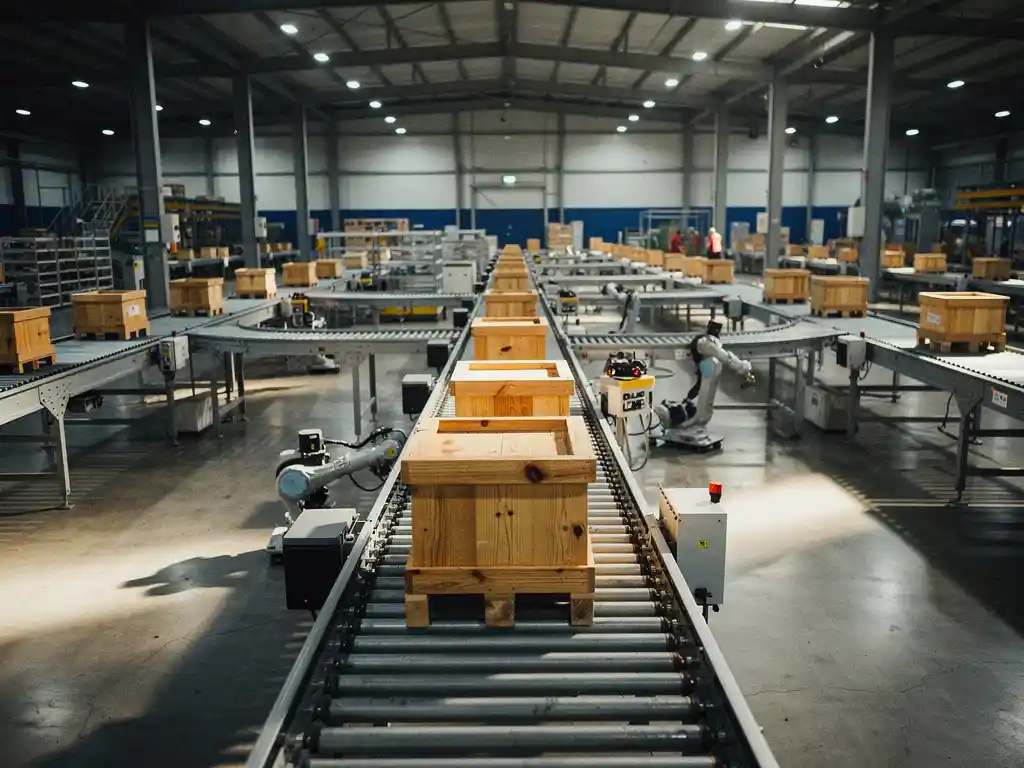
In practice, this means connecting different stages of your process—such as receiving, sorting, packing, and dispatch—with a network of conveyors that keep products moving at a controlled pace. In horticultural distribution centers specifically, this includes moving trays, pots, crates, and pallets through environments that are often humid, muddy, and physically demanding. A well-designed internal transport system creates a seamless production line in which each workstation receives products exactly when they are needed.
Why should distribution centers automate internal transport?
Distribution centers should automate internal transport to reduce labor costs, improve throughput speed, and protect workers from physical strain. Manual internal transport is one of the most time-consuming and injury-prone activities in any facility, and automating it delivers immediate gains in both efficiency and employee well-being.
When employees spend their shifts walking back and forth, carrying or pushing loads, they cover significant distances every day. This leads to fatigue, repetitive strain injuries, and higher absenteeism. Automation eliminates this unnecessary movement and allows your team to focus on value-adding tasks instead. At the same time, a consistent conveyor system removes the bottlenecks and waiting times that interrupt production flow, allowing your facility to handle higher volumes without adding headcount. For distribution centers in the horticultural sector, where seasonal peaks create intense pressure, this reliability is particularly valuable.
What types of conveyor systems are used in distribution centers?
Distribution centers commonly use flat belt conveyors, roller conveyors, buffer conveyors, elevator belts, and ground-level transport belts. Each type serves a specific function within the overall flow of goods, and most facilities combine several types to build a complete internal transport solution.
- Flat belt conveyors move products horizontally between workstations at a consistent speed.
- Roller conveyors are well suited for crates, trays, and heavier loads that can roll smoothly along a track.
- Buffer conveyors act as a temporary storage zone within the line, absorbing differences in pace between upstream and downstream processes.
- Elevator belts transport products between different height levels, connecting floors or raised workstations.
- Ground-level transport belts are designed for moving soil, substrate, or bulk materials in growing and potting environments.
In horticultural distribution centers, the choice of materials matters as much as the type of system. Conveyors need to withstand moisture, soil, and the wear that comes with constant use in greenhouse and processing environments. This is why purpose-built conveyor belt solutions for horticulture outperform standard industrial equipment that was not designed for these conditions.
What’s the difference between fixed and mobile conveyor systems?
Fixed conveyor systems are permanently installed in a set layout and are ideal for facilities with a stable, repetitive production flow. Mobile conveyor systems are freestanding, repositionable units that can be moved and reconfigured as operational needs change. The key difference is flexibility versus throughput capacity.
Fixed conveyor systems
Fixed systems are the right choice when your distribution center processes the same product types in the same sequence day after day. They offer higher capacity, seamless integration with other machinery, and a more polished workflow. Installation requires upfront planning, but once in place, a fixed system runs reliably with minimal intervention.
Mobile conveyor systems
Mobile systems suit operations that change frequently, such as facilities that handle multiple crop types across different seasons or that need to reconfigure their floor layout regularly. Units like standalone belt conveyors can be repositioned quickly without structural modifications. They also serve as an excellent starting point for businesses that want to experience automation before committing to a fully fixed installation. We offer rental options for exactly this reason, giving you a low-risk way to test the impact of conveyor automation in your own facility.
How do you integrate conveyor belts with existing production lines?
You integrate conveyor belts with existing production lines by mapping your current product flow, identifying connection points between workstations, and selecting conveyor types that match the speed, height, and load requirements at each stage. Integration works best when it is planned as a complete system rather than added piece by piece.
Start by walking through your facility and documenting where products move, how far, at what height, and at what pace. This reveals where delays occur and where a conveyor could replace manual handling. The next step is matching conveyor specifications to each transition point, taking into account product dimensions, weight, and fragility. In horticultural settings, conveyors also need to be compatible with potting machines, sorting lines, and robotic systems if these are already in use. Because all our conveyor systems are designed to work together and connect with other machinery, building an integrated line from a single supplier avoids the compatibility issues that arise when mixing equipment from different sources.
How do you choose the right automation system for your distribution center?
Choosing the right automation system for your distribution center starts with understanding your specific product, volume, layout, and growth plans. There is no universal solution, but a structured approach to selection prevents costly mistakes.
Consider these key factors when evaluating your options:
- Product characteristics: What are you moving? Pots, trays, crates, or bulk materials each require different conveyor types and surface materials.
- Volume and throughput: How many units per hour does your peak operation require? This determines the speed and capacity specifications you need.
- Facility layout: Are your workstations at the same height? Do you need to move products around corners or between floors? Layout drives system design.
- Environment: Is your facility humid, dusty, or subject to temperature extremes? In horticultural environments, material durability is non-negotiable.
- Scalability: Will your operation grow? Choosing a system that can be extended saves significant cost later.
- Integration requirements: Does the system need to connect with existing machinery such as potting machines, weighing stations, or packaging lines?
Working with a specialist who understands both the technical side and the operational realities of your sector makes this process significantly more reliable. With more than three decades of experience in horticultural conveyor belt automation, we design, build, and install systems tailored to each facility, from the initial engineering drawings through commissioning and ongoing maintenance. If you are still weighing your options, starting with a rental system is a practical way to validate the fit before making a permanent investment.
Frequently Asked Questions
How long does it typically take to install a conveyor system in a distribution center?
Installation timelines vary depending on the size and complexity of the system, but most fixed conveyor installations in distribution centers take between one and four weeks from start to finish. Simpler mobile or modular setups can be operational within a day or two. To minimize disruption to your ongoing operations, a good supplier will work with you to phase the installation around your production schedule, often completing the bulk of the work during off-peak hours or planned downtime.
What are the most common mistakes distribution centers make when automating internal transport?
The most common mistake is automating individual bottlenecks in isolation rather than designing the system as a complete, connected flow from the start. This often results in new bottlenecks forming just upstream or downstream of the newly automated section. Other frequent errors include underestimating peak throughput requirements, choosing standard industrial equipment not suited to the specific environment (such as humid or muddy horticultural settings), and failing to plan for future scalability, which forces costly redesigns as the operation grows.
How do I calculate the return on investment (ROI) for a conveyor automation project?
Start by quantifying your current costs associated with manual internal transport: labor hours spent on carrying and moving goods, absenteeism and injury-related costs, and the value of lost throughput caused by bottlenecks and delays. Then compare these against the projected costs of the conveyor system, including installation, maintenance, and energy use. Most distribution centers see a full return on investment within two to four years, with facilities that operate at high volumes or experience significant seasonal peaks often achieving payback even faster.
Can conveyor systems handle fragile or irregularly shaped products without causing damage?
Yes, provided the system is specifically designed with your product characteristics in mind. Belt surface material, conveyor speed, transition angles, and the design of transfer points between conveyor sections all play a critical role in protecting fragile items such as potted plants, flower trays, or delicate packaging. Working with a specialist who can engineer these details for your specific product range is essential — a generic, off-the-shelf system is far more likely to cause product damage than one purpose-built for your operation.
What does ongoing maintenance of a conveyor system involve, and how much downtime should I expect?
Routine maintenance typically includes belt tension checks, cleaning, lubrication of moving parts, and inspection of rollers and drive components. For most well-maintained systems, this can be carried out during scheduled production breaks and does not require significant planned downtime. Choosing a supplier who offers a maintenance contract and has local technical support available means that unexpected issues are resolved quickly, keeping unplanned downtime to an absolute minimum.
Is it possible to expand or reconfigure a conveyor system after it has been installed?
Absolutely, and this is something worth planning for from the very beginning. Systems that are designed with modular components and standardized connection points can be extended, rerouted, or upgraded as your facility grows or your product mix changes. Discussing your five- to ten-year operational outlook with your supplier during the design phase ensures that the initial installation is future-proofed, saving you from having to replace entire sections of the system when your needs evolve.
How do I get started if I'm not yet sure whether full automation is the right step for my facility?
The most practical first step is to trial a mobile or rental conveyor system in the area of your facility where manual transport is causing the most disruption. This gives you real operational data on throughput improvements, labor savings, and workflow changes without the commitment of a permanent installation. From there, you can make a fully informed decision about whether and how to expand the automation across your facility, with concrete results from your own operation to justify the investment.
Related Articles
- When should you use single-row versus double-row potting?
- How do you calculate the number of production hours needed for a large crop batch?
- When does manual potting become too slow for your nursery?
- What does a fully automated potting line actually look like?
- How do you choose between a mobile and fixed conveyor system?