

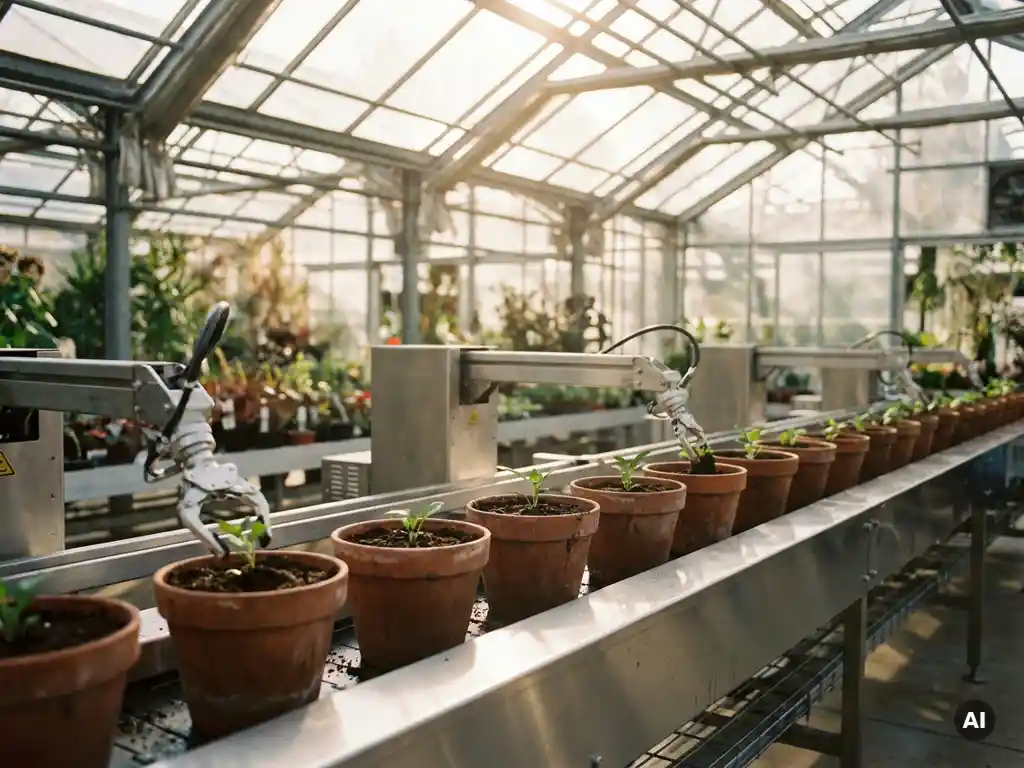
How do you design an efficient potting and topping line?
An efficient potting and topping line combines a potting machine, a topping machine, conveyors, and buffer tables into a single continuous workflow that moves pots from soil filling through final coverage without manual intervention at each step. The right design depends on your target output per hour, the substrate you use, and how the line connects to the rest of your greenhouse transport. Below, we answer the most common questions growers ask when planning or upgrading a potting line.
What does a potting and topping line actually consist of?
A potting and topping line is a sequence of machines that automates the process of filling pots with substrate and, where required, applying a top layer of bark, gravel, or decorative cover material. The core components are a potting machine, a topping machine, and a conveyor system that connects them into one continuous flow.
In practice, most professional lines include the following elements:
- Soil conveyor or ground transport belt that feeds substrate into the potting machine
- Potting machine that fills and firms each pot to the correct depth and density
- Conveyor belts that move filled pots forward without manual carrying
- Topping machine that applies a decorative or functional top layer after potting
- Buffer table that accumulates pots between stations so operators are never waiting or rushing
- Sorting or distribution system that routes finished pots to trolleys, trays, or greenhouse benches
Each element plays a specific role. Remove one and you typically create a bottleneck. The topping machine, for example, is often underestimated, without it, operators apply cover material by hand, which slows the entire line down to manual speed and defeats the purpose of automating the potting step.
How do you calculate the right capacity for your potting line?
To calculate the right capacity, divide your peak daily output target by the number of productive hours available on your busiest day. Add a buffer of at least 15 to 20 percent for interruptions, substrate refills, and pot changeovers. The result gives you the minimum pots-per-hour rating your potting machine must meet.
A few factors that directly influence this calculation:
- Seasonal peaks: Auction deadlines and planting windows compress your schedule. Size for your peak week, not your average week.
- Pot size range: Switching between pot sizes takes time. If you run multiple sizes per day, account for changeover time in your productive hours.
- Number of operators: A high-capacity machine paired with too few people to keep it fed and emptied will never reach its rated output.
- Line balance: Your topping machine, conveyors, and buffer tables must all match or exceed the potting machine’s speed. A 6,000-pot-per-hour potting machine paired with a slow topping machine creates an immediate jam.
Many growers undersize their line based on current volumes and then struggle within two growing seasons. It is almost always more cost-effective to choose a machine with headroom for growth than to replace it prematurely.
What’s the difference between a basic and an automated potting line?
A basic potting line automates the filling and firming of pots but relies on operators to adjust settings manually, monitor soil depth by eye, and handle changeovers by hand. A fully automated potting line adds features like automatic soil detection, programmable settings per pot size, touchscreen control, and integrated conveyor management that reduces the need for manual intervention at each step.
The practical difference shows up in three areas:
- Consistency: Automatic soil detection ensures every pot receives the same volume and density, regardless of which operator is running the machine or how tired they are at the end of a long shift.
- Speed of changeover: On a basic machine, switching from a 10 cm to a 17 cm pot means manual adjustments and test runs. On an automated machine, you recall a saved programme from the touchscreen and you are running in minutes.
- Maintenance and downtime: Automated machines typically use guided chain systems and sealed components that reduce wear and lower the frequency of unplanned stops, precisely when you can least afford them.
For growers running a single pot size at moderate volumes, a solid basic machine can be the right choice. For operations with varied pot sizes, high seasonal pressure, or limited staffing, the step up to a fully automated line pays for itself in reliability and labour savings.
How does substrate type affect potting line design?
Substrate type directly affects which components you need, how they are configured, and how much power the system requires. Heavy or chunky mixes, such as bark-heavy substrates or those with perlite and coarse fibres, place more strain on conveyors and require a potting machine with sufficient torque and a robust filling mechanism to handle irregular particle sizes without jamming.
Lighter peat-based mixes flow more easily but can bridge or clump in hoppers if humidity is high. Wet substrates add weight to every conveyor run and can clog topping machine outlets if the material is not free-flowing.
When specifying your line, share your exact substrate composition with your supplier. Key questions include:
- What is the maximum particle size in your mix?
- At what moisture level do you typically pot?
- Do you use the same substrate year-round, or does it vary by crop?
A line designed around one substrate and then switched to a coarser mix mid-season is a common cause of unexpected downtime. Designing for your most demanding substrate from the start avoids this problem entirely.
How do you integrate a potting line with the rest of your greenhouse transport?
Integrating a potting line with your broader greenhouse transport means connecting the output of the potting and topping line directly to the internal distribution system, whether that is roller conveyors, chain conveyors, or trolley systems, so that finished pots move to their growing position without manual carrying.
The connection points to plan for are:
- Entry point: How does substrate arrive at the potting machine? A ground transport belt that feeds directly from your soil storage eliminates the need for manual shovelling or forklift runs during production.
- Exit point: Where do pots go after the topping machine? The line should discharge directly onto a roller conveyor or trolley-loading station rather than a flat surface where operators must stack by hand.
- Line height and spacing: Conveyor heights must align across the system. Mismatched heights create manual lifting points that negate the ergonomic benefit of automation.
- Control integration: Where multiple machines run in sequence, a shared control panel or linked PLC system allows one operator to manage the entire line rather than one person per machine.
Planning the integration before purchasing individual machines is essential. A potting machine chosen in isolation may not connect cleanly to your existing conveyor heights or spacing, forcing costly modifications later.
Should you buy or rent a potting machine?
Buying a potting machine makes the most sense for growers with consistent, high-volume production who want full control over the machine and no ongoing rental costs. Renting is the better choice when you need to cover a seasonal peak, want to test a machine before committing, or are not yet ready to make a capital investment.
Renting also reduces risk for growers who have had a disappointing experience with a previous machine and want to verify performance under real production conditions before signing a purchase agreement. A trial period lets you run the machine with your own substrate, your own pot sizes, and your own team before making a decision.
Questions to ask yourself when deciding:
- Is your potting volume consistent throughout the year, or concentrated in one or two seasons?
- Do you have the technical capacity in-house to maintain the machine, or do you rely on the supplier for service?
- Is your current machine failing, or are you adding capacity to an already functioning line?
For most established growers with year-round production, ownership is the more economical option over a three- to five-year horizon. For start-ups or growers testing a new crop segment, renting first is the lower-risk path.
How MartinStolze helps you design your potting and topping line
We design and build complete potting and topping lines from the ground up, fully in-house, from the first technical drawing to installation and operator training at your location. Our approach covers every element of the line:
- Stolze 3030 and 3030 PRO potting machines suitable for pots from 7 to 30 cm, with capacities up to 8,000 pots per hour; the PRO version adds automatic soil detection, a guided chain for greater stability, and programmable touchscreen menus for different pot sizes and substrate settings
- Topping machines that integrate directly with the potting machine output for seamless coverage without a manual step
- Conveyor belts, buffer tables, and ground transport systems that connect every station into one continuous, ergonomic flow
- Custom configuration advice based on your substrate, pot range, and seasonal output targets, including a demonstration at our facility in De Lier
- Both purchase and rental options, including trial periods, so you can verify performance before committing
Whether you are building a new line from scratch or upgrading an existing setup, we are happy to think through the design with you. Contact us to discuss your situation and find the configuration that fits your operation.
Frequently Asked Questions
How long does it typically take to install and commission a new potting and topping line?
Installation and commissioning time depends on the complexity of your line and how well your facility is prepared in advance, but most professional potting and topping lines can be installed and made operational within one to three days. Preparation is the key factor: having your substrate storage, conveyor heights, and electrical connections confirmed before the installation team arrives significantly reduces on-site time. Budget additional time for operator training, test runs with your own substrate, and fine-tuning machine settings before you go into full production.
What are the most common mistakes growers make when setting up a potting line for the first time?
The most frequent mistake is purchasing individual machines without planning the full line layout first, which often results in mismatched conveyor heights, insufficient buffer capacity, or a topping machine that cannot keep pace with the potting machine. A close second is sizing the line for current volumes rather than peak-season demand, which forces growers to either slow the line down or invest in replacement equipment within a few seasons. Always design the line as a system, not as a collection of separate purchases.
How often does a potting machine need to be serviced, and what does maintenance typically involve?
Most professional potting machines require a scheduled service check at least once per season, with daily and weekly checks carried out by your own operators as part of normal operation. Routine maintenance typically includes lubricating moving parts, inspecting conveyor belts and filling mechanisms for wear, cleaning substrate residue from sensors and outlets, and verifying that soil depth settings remain accurate. Automated machines with guided chain systems and sealed components generally require less frequent intervention than older mechanical designs, but keeping a maintenance log and following the manufacturer's service schedule is the most reliable way to avoid unplanned downtime.
Can a potting line handle multiple pot sizes in a single production day, and how disruptive is the changeover?
Yes, modern potting lines are designed to handle multiple pot sizes within a single shift, but the time required for changeover varies significantly between machine types. On a basic machine, switching pot sizes involves manual adjustments to filling depth, firming pressure, and conveyor guides, which can take 20 to 40 minutes and requires test pots to confirm settings. On an automated machine with programmable touchscreen menus, recalling a saved pot programme typically takes just a few minutes, making multi-size production days far more practical and reducing substrate waste from test runs.
What should I look for when evaluating a potting machine supplier or manufacturer?
Beyond the machine specifications themselves, look for a supplier who designs and builds their equipment in-house, as this gives you a single point of contact for technical support and faster access to spare parts. Ask whether the supplier can demonstrate the machine running with your specific substrate and pot sizes before you commit, and confirm what after-sales support looks like in terms of response time, spare parts availability, and on-site service coverage. A supplier who offers both purchase and rental options is also a practical indicator that they are confident in their equipment's real-world performance.
Is it possible to upgrade an existing potting line rather than replacing it entirely?
In many cases, yes — upgrading specific components of an existing line is a cost-effective alternative to a full replacement, provided the core machines are still mechanically sound. Common upgrades include adding a topping machine to a line that currently relies on manual application, replacing worn conveyor sections, or integrating a buffer table to smooth out flow between stations. The most important step before planning an upgrade is to identify where your current bottleneck actually sits, since adding capacity to the wrong station will not improve overall throughput.
How do I know when my current potting setup has reached its limits and it's time to invest in a new or upgraded line?
The clearest signals are consistent output shortfalls during peak season despite running at full staffing, increasing frequency of unplanned stops due to mechanical wear, and labour costs rising because operators are compensating for gaps in automation with manual handling. If your team is regularly hand-applying top material, manually carrying pots between stations, or adjusting machine settings multiple times per shift to maintain quality, those are strong indicators that the line is no longer matched to your production demands. A practical first step is to measure your actual pots-per-hour output against your original machine rating — a significant gap often points to wear, misconfiguration, or a line that was undersized from the start.
Related Articles
- Can a topping machine automatically detect whether a pot is present?
- Can a topping machine work with an existing conveyor system?
- Why do some potting machines struggle with heavy soil mixes?
- What should you look for when replacing an outdated potting machine?
- How do you reduce physical strain on staff during potting season?