
How do you integrate a conveyor belt with potting machines?
In modern horticulture, internal transport is one of the biggest bottlenecks preventing nurseries and packaging centers from reaching their full potential. When a conveyor belt and a potting machine work in perfect sync, the entire production line flows smoothly—plants move without interruption, staff can focus on skilled tasks, and throughput increases significantly. But getting that integration right requires more than simply placing two machines next to each other.
Whether you are setting up a new production line or upgrading an existing one, understanding how conveyor belt horticulture integration with potting machines actually works will save you time, money, and frustration. This guide answers the most important questions directly, so you can make confident decisions for your operation.
What does integrating a conveyor belt with a potting machine actually mean?
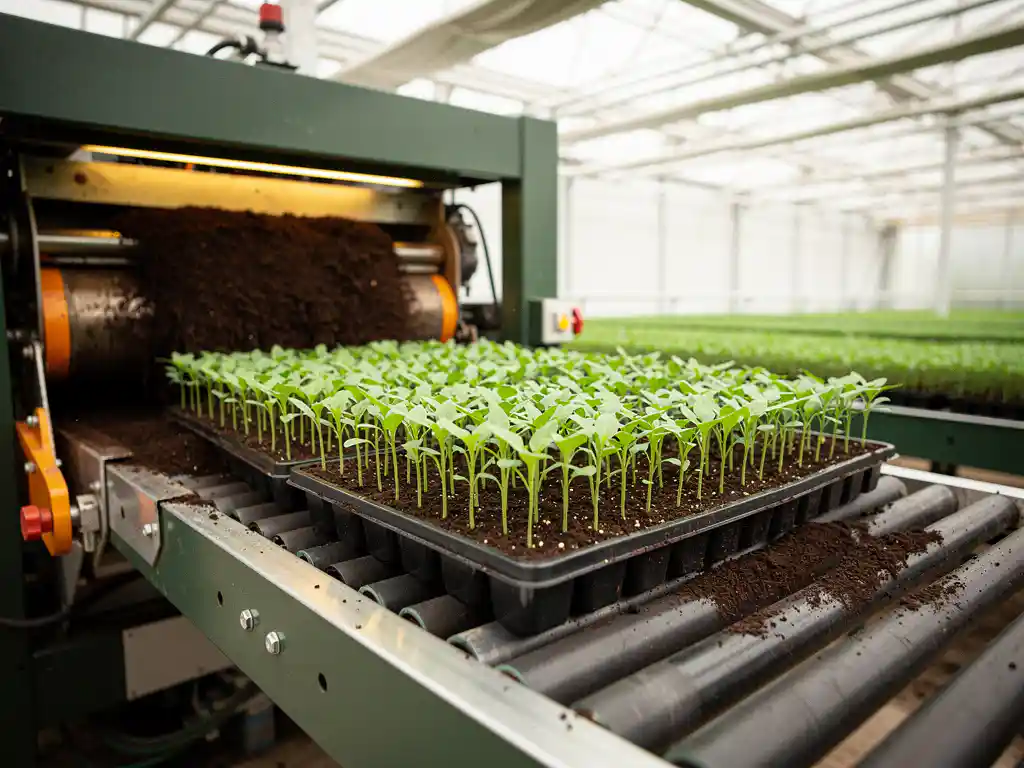
Integrating a conveyor belt with a potting machine means connecting the two systems so that pots, trays, or plants move automatically from one stage to the next without manual handling. The conveyor receives filled pots directly from the potting machine’s output and transports them to the next step in the process, whether that is a watering station, a buffer area, or a growing zone.
In practice, integration involves aligning the potting machine’s physical output height and width with the conveyor belt’s infeed. It also means synchronizing the speed of both systems so the belt does not create a backlog at the potting machine or leave gaps that waste capacity. Beyond the mechanical connection, integration can include sensors, controls, and software that allow both machines to communicate and adjust to each other automatically.
True integration is not simply placing a belt next to a potting machine. It is a coordinated system in which both machines behave as a single, continuous production line. This distinction matters enormously when you are aiming for consistent output, minimal downtime, and a predictable workflow throughout the growing day.
Why does conveyor belt integration matter for nursery efficiency?
Conveyor belt integration matters for nursery efficiency because it eliminates manual transport between potting and the next production phase. Every time a worker carries trays or moves pots by hand, time is lost and physical strain accumulates. A properly integrated system keeps plants moving continuously, reducing both labor costs and the risk of repetitive strain injuries among your team.
In a busy nursery or packaging center, the potting machine is only as productive as the system around it. If workers cannot keep up with removing pots from the output, the machine slows or stops. If the conveyor runs too fast, pots tip or stack up. Integration solves these problems by creating a controlled, consistent flow that matches the pace of your potting machine precisely.
There is also a quality argument. Automated transport reduces the number of times plants are handled, which means fewer damaged roots, less soil spillage, and more uniform presentation at the end of the line. For operations in the ornamental, vegetable, and fruit sectors, this consistency directly affects product quality and customer satisfaction.
How does a conveyor belt connect to a potting machine in practice?
A conveyor belt connects to a potting machine by aligning the potting machine’s discharge point with the belt’s infeed section. The key connection points are height, width, and speed. The belt surface must sit at the correct height to receive pots without dropping or tipping them, and the belt width must accommodate the pot or tray dimensions being used.
Physical alignment and mounting
Most potting machines discharge pots at a fixed height, so the conveyor infeed is adjusted to match. Adjustable legs or mounting brackets on the conveyor allow for fine-tuning during installation. Where space is limited, a short transition piece or curved section can bridge the gap between the two machines without interrupting flow.
Speed synchronization
Speed synchronization is handled through variable-speed drives on the conveyor motor. During commissioning, the belt speed is set to match the output rate of the potting machine. More advanced setups use sensors at the infeed point to detect pot presence and adjust belt speed dynamically, preventing buildup or gaps automatically.
Electrical and control connections
For fully integrated systems, the conveyor and potting machine share a control signal. When the potting machine pauses, the conveyor slows or stops. When it restarts, the belt responds immediately. This kind of coordinated control requires compatible electrical interfaces between the two machines, which is why sourcing both from a specialist with experience in horticulture automation makes the process significantly smoother.
What types of conveyor systems work best with potting machines?
Flat-belt conveyors and roller conveyors work best with potting machines in most horticultural applications. Flat belts provide stable, continuous support for pots and trays of all sizes, while roller conveyors suit heavier loads or situations where accumulation is needed. The right choice depends on your pot size, production speed, and the layout of your facility.
Buffer conveyors are particularly valuable in potting-line setups. They absorb natural variation in output speed, holding pots temporarily when the downstream process slows down and releasing them when capacity opens up again. This prevents the potting machine from being forced to stop every time there is a brief delay further along the line.
Elevator conveyors become relevant when the production line needs to change height—for example, moving pots from ground level up to a higher transport system or sorting line. Mobile conveyor systems offer flexibility for operations where the layout changes seasonally or where the potting machine is moved between greenhouses. We produce all of these system types specifically for horticultural conditions, built to handle moisture, soil, and the continuous demands of production environments.
Can an existing conveyor belt be integrated with a new potting machine?
Yes, an existing conveyor belt can often be integrated with a new potting machine, but compatibility depends on several factors, including height alignment, belt width, speed range, and control-system compatibility. A technical assessment of the existing belt is the essential first step before committing to a new potting machine purchase.
Older conveyor belts may lack variable-speed drives, making speed synchronization difficult or impossible without an upgrade. Belt width is another common mismatch—a belt sized for smaller pots may not handle the output of a new, higher-capacity potting machine. In these cases, a partial upgrade of the existing system is often more cost-effective than a full replacement.
Control-system compatibility is the most technically demanding aspect. If the existing belt uses older electrical controls, connecting it to a modern potting machine with digital interfaces may require an additional control module or rewiring of the belt’s drive system. Working with a supplier who understands both the conveyor and the potting machine makes this assessment straightforward rather than a guessing exercise.
How do you avoid common mistakes when integrating conveyor and potting systems?
The most common mistakes when integrating conveyor and potting systems are mismatched speeds, incorrect height alignment, insufficient buffer capacity, and underestimating the importance of material compatibility with the greenhouse environment. Avoiding these mistakes starts with thorough planning before any equipment is ordered or installed.
- Plan the full line before purchasing individual machines. Buying a potting machine and a conveyor belt separately without confirming their compatibility creates expensive problems during installation.
- Always verify output height during the design phase. A height difference of just a few centimeters between the potting machine discharge and the belt infeed can cause pots to tip or soil to spill continuously.
- Size your buffer capacity realistically. A short buffer section fills up quickly during any downstream delay. Build in more buffer length than you think you need.
- Choose materials suited to your environment. Standard industrial conveyors are not built for the moisture and soil conditions inside a greenhouse. Components corrode, belts stretch, and maintenance costs rise quickly.
- Commission both systems together. Testing the potting machine and conveyor in isolation tells you nothing about how they behave as an integrated system. Always run a full commissioning test with both machines operating simultaneously under realistic production conditions.
Working with a single supplier for both systems eliminates most of these risks at the source. When the potting machine and conveyor belt are engineered to work together from the start, alignment, speed synchronization, and control compatibility are resolved during the design phase rather than on installation day. We have been building integrated transport and potting-line solutions for horticultural operations for over three decades, and the lessons from that experience are built directly into how we design and commission every system.
Frequently Asked Questions
How long does it typically take to install and commission an integrated conveyor and potting-machine system?
Installation and commissioning time depends on the complexity of the system, but most straightforward integrations can be completed within one to three days. More complex setups involving elevator conveyors, buffer zones, or custom control interfaces may take up to a week. The most important factor is preparation: having the floor space cleared, utility connections ready, and both machines on-site before the installation team arrives will prevent the majority of delays.
What maintenance does an integrated conveyor and potting system require to stay running reliably?
Routine maintenance focuses on three areas: belt tension and wear, drive components such as motors and gearboxes, and sensor and control connections. In a greenhouse environment, soil and moisture accelerate wear, so weekly visual inspections and monthly lubrication of drive components are good baselines. Keeping spare belts and drive belts on-site for your specific system minimizes downtime when a component does need replacing.
Can one conveyor belt system handle multiple pot sizes without reconfiguring the entire line?
Yes, many modern flat-belt conveyor systems can handle a range of pot sizes without major reconfiguration, provided the belt width is sized for your largest pot from the start. Adjustable side guides can be repositioned quickly to accommodate different pot diameters or tray widths. However, if your operation regularly switches between very small and very large containers, a modular system with interchangeable infeed sections gives you the most flexibility with the least downtime between changeovers.
What happens to the integration if the potting machine needs to stop mid-run for refilling or maintenance?
In a properly integrated system, a stop signal from the potting machine is communicated directly to the conveyor, which slows or halts automatically to prevent empty belt sections or pot pile-ups. A buffer conveyor between the two machines provides additional protection, holding any pots already on the line until the potting machine restarts. This coordinated response is one of the key advantages of full electrical integration over a simple mechanical connection.
Is it worth integrating a conveyor belt if my nursery only runs the potting machine a few hours per day?
Even in lower-volume operations, conveyor integration delivers value by reducing physical strain on workers and improving consistency during the hours the machine is running. The return on investment calculation shifts from pure throughput gains to labor savings and injury prevention, both of which matter regardless of production volume. A compact, cost-effective belt system sized to your actual output rate is often a more practical entry point than a full industrial-scale solution.
How do I calculate the right conveyor belt speed for my potting machine's output rate?
Start with your potting machine's output in pots per minute and the spacing you want to maintain between pots on the belt. Multiply the desired pot spacing in meters by the output rate to get the minimum belt speed in meters per minute. In practice, it is advisable to set the belt speed slightly higher than this minimum and use a buffer section to absorb variation, rather than running the belt at the exact minimum, which leaves no margin for natural fluctuations in potting speed.
What should I ask a supplier before purchasing an integrated conveyor and potting-machine system?
Ask specifically whether the two machines have been tested together as an integrated system, not just individually, and request references from nurseries running a similar setup. Confirm that the supplier handles both the mechanical alignment and the electrical control integration, rather than leaving the connection between machines to a third party. Finally, ask about spare-parts availability and response times for service calls, since a production line that cannot get parts quickly is a significant operational risk.
Related Articles
- What are the benefits of using a topping machine after potting?
- Can a potting machine have too much capacity for your production line?
- How do you balance labor capacity with machine capacity?
- How do you calculate line capacity around a potting machine?
- What pot sizes can an automatic potting machine typically handle?