
How do you move plants efficiently in a greenhouse?
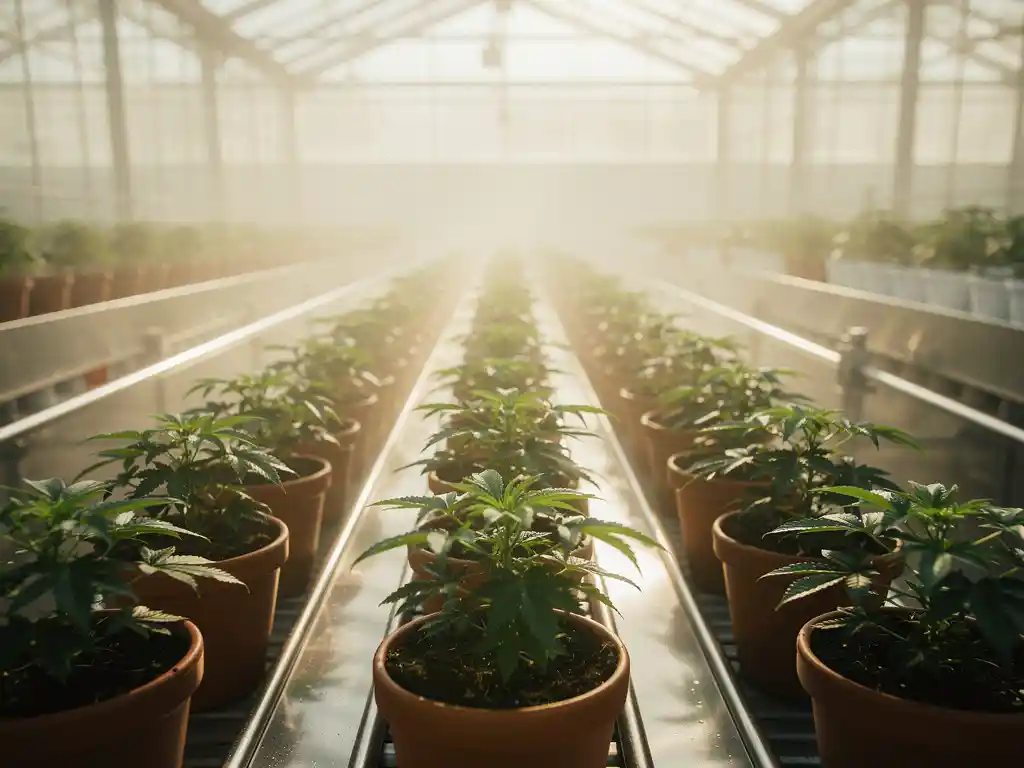
Moving plants efficiently inside a greenhouse is one of those challenges that looks simple from the outside but quickly becomes a daily operational headache. Whether you’re running a large ornamental nursery or a vegetable production facility, the way you handle internal transport directly affects your labour costs, your team’s physical well-being, and the overall speed of your production line. Getting it right matters more than most growers initially realise.
This article answers the most common questions growers and operations managers ask when they’re looking to improve plant transport in their greenhouse. From understanding the core challenges to choosing the right horticultural conveyor belt solution, you’ll find direct, practical answers to guide your decision-making.
Why is moving plants in a greenhouse so challenging?
Moving plants in a greenhouse is challenging because the environment combines high humidity, narrow aisles, heavy repetitive loads, and time-sensitive production schedules. These factors make manual transport physically demanding and inefficient, leading to bottlenecks, physical strain on workers, and a significant loss of productive time across every shift.
Unlike a standard warehouse, a greenhouse operates under conditions that wear down both people and equipment quickly. Workers can cover several kilometres per shift simply transporting trays and pots from one station to the next. Over time, this results in physical complaints, increased sick leave, and difficulty retaining staff. At the same time, the production flow itself suffers. When transport relies on manual effort, queues and waiting times build up between stations, slowing down the entire line.
The environment also places specific demands on any equipment used. Standard industrial solutions often struggle with moisture, soil contamination, and the continuous loading cycles typical of horticultural settings. This is why solutions designed specifically for the greenhouse sector outperform repurposed industrial alternatives in the long run.
What are the most common methods for transporting plants in a greenhouse?
The most common methods for transporting plants in a greenhouse are manual carrying, trolleys and carts, rail systems, and automated conveyor belt systems. Each method varies significantly in labour demand, throughput capacity, and suitability for different greenhouse layouts and production volumes.
Manual carrying remains widespread in smaller operations, but it is the least efficient option at scale. Trolleys and carts reduce physical strain somewhat and allow one worker to move larger volumes, but they still require a person to push, steer, and unload at each station. Rail systems work well in long, straight growing areas but lack flexibility when layouts change.
Automated conveyor belts represent the most advanced and scalable approach. They move plants continuously between workstations without requiring a dedicated worker for transport. In busy production environments, this frees up staff for higher-value tasks like potting, sorting, and quality control rather than physically moving product from A to B.
What’s the difference between fixed and mobile conveyor systems for greenhouses?
Fixed conveyor systems are permanently installed along a set production route, while mobile conveyor systems can be repositioned as needed. Fixed systems suit high-volume operations with a stable layout, whereas mobile systems offer flexibility for seasonal growers or businesses that want to test automation before committing to a permanent installation.
A fixed system is the right choice when your production flow is consistent and predictable. Once installed, it becomes part of your infrastructure and can be integrated with potting machines, sorting lines, and other automated equipment. It delivers maximum throughput and requires minimal daily setup.
Mobile systems, such as the EasyMax and Wevab that we produce, are ideal when flexibility is a priority. They can be moved between greenhouse sections, deployed during peak seasons, and repositioned as your operation grows or changes. For growers who are new to conveyor belt automation, a mobile system also offers a lower-risk entry point. We offer rental options for precisely this reason, allowing you to experience the benefits before making a permanent investment.
How does a conveyor belt system work in a greenhouse?
A greenhouse conveyor belt system works by transporting plants along a continuously moving belt from one workstation to the next. Workers stand at fixed positions along the line, performing tasks like potting, watering, or labelling as plants pass by, rather than walking back and forth to collect or deliver them.
The core principle is straightforward: instead of bringing workers to the plants, the plants come to the workers. This eliminates unnecessary movement, reduces handling time, and creates a steady, controlled production rhythm. Speed is typically adjustable, so the line can be tuned to match the pace of the slowest workstation and avoid pile-ups.
How do conveyor belts integrate with other greenhouse equipment?
Modern conveyor belt systems are designed to connect with other machinery in the production line. Buffer belts absorb temporary surges in output so the line keeps flowing even when one station runs slightly faster or slower than another. Elevator belts move plants between height levels. Roller conveyors guide trays and pots smoothly around corners or into packing areas. When all components are compatible and sourced from a single supplier, integration is straightforward, and the entire line operates as one coordinated system.
How many staff can greenhouse automation actually save?
The number of staff saved through greenhouse automation depends on the size of your operation and the degree of automation implemented, but it is common for growers to reduce manual transport labour significantly once a conveyor system is in place. In many cases, one well-designed conveyor line can replace the equivalent of multiple full-time transport roles per shift.
The savings come from two directions. First, you eliminate the dedicated transport workers whose sole job is moving plants from one point to another. Second, you increase the output of the workers who remain because they spend their time on productive tasks rather than walking. Fewer workers handling the same or greater volume means a direct improvement in cost per unit produced.
It is also worth considering the indirect savings. Reduced physical strain means lower sick leave and fewer workplace injuries. Consistent throughput means less overtime during peak periods. Over a full growing season, these factors add up to a meaningful improvement in operational efficiency.
How do you choose the right transport system for your greenhouse?
Choosing the right transport system for your greenhouse comes down to four key factors: your production volume, the layout of your facility, whether you need flexibility or permanence, and your integration requirements with existing machinery. Answering these questions honestly will point you towards the right solution.
Start with your production volume and flow. High-volume operations with consistent layouts benefit most from fixed, integrated conveyor lines. Smaller or more variable operations may get better value from mobile systems that adapt to changing needs. Consider whether your layout has straight runs, corners, or level changes, as each affects which belt types and configurations will work best.
Think about integration early. If you run potting machines, sorting equipment, or packing lines, your transport system needs to connect with them cleanly. Choosing a supplier who can engineer and install the complete line, rather than piecing together components from different sources, reduces the risk of compatibility problems and simplifies ongoing maintenance.
Finally, if you are uncertain, start with a rental. Testing a mobile conveyor system in your actual production environment gives you real data on time savings and workflow improvements before you commit to a permanent installation. We work with growers at every stage of this decision, from initial layout planning through to full installation and after-sales service, all carried out by our own engineers.
Frequently Asked Questions
How long does it typically take to install a fixed greenhouse conveyor system, and how much disruption should I expect during installation?
Installation time for a fixed conveyor system depends on the size and complexity of your production line, but most standard installations are completed within a few days to a couple of weeks. Experienced suppliers who use their own engineers — rather than subcontractors — can plan the installation around your production schedule to minimise downtime. It's worth discussing a phased installation approach with your supplier if shutting down operations entirely isn't an option.
What maintenance does a greenhouse conveyor belt system require, and how do I keep it running in a humid, soil-heavy environment?
Greenhouse conveyor systems designed specifically for horticultural use are built to handle moisture, soil, and continuous operating cycles, but they still require routine maintenance to stay in peak condition. This typically includes regular cleaning of belt surfaces, checking belt tension and alignment, lubricating drive components, and inspecting rollers for wear or debris build-up. Working with a supplier who offers after-sales service and stocks spare parts means any issues can be resolved quickly without prolonged downtime.
Can a conveyor system handle different pot sizes, tray types, and plant heights without needing constant adjustment?
Yes — most purpose-built greenhouse conveyor systems are designed to accommodate a range of pot sizes and tray formats, and belt width and speed can be configured to suit your specific product mix. For operations that handle significant variety, it's worth discussing your full range of pot sizes and container types with your supplier during the design phase so the system is engineered to handle them all reliably. Some configurations also use guide rails or side supports to keep different container types stable and centred on the belt.
What if my greenhouse layout changes in the future — will a fixed conveyor system become obsolete?
A well-designed fixed conveyor system can often be extended, reconfigured, or supplemented with mobile units as your layout evolves, particularly when you work with a supplier who engineers bespoke solutions rather than selling off-the-shelf products. It's a good idea to discuss your anticipated growth and any planned layout changes with your supplier before installation, so the system is designed with future adaptability in mind. Combining a fixed backbone with mobile conveyor units is also a practical way to future-proof your setup without sacrificing throughput.
Is greenhouse conveyor automation only viable for large operations, or can smaller growers benefit too?
Automation is not exclusively for large-scale producers — smaller growers can achieve meaningful efficiency gains even with a single mobile conveyor unit deployed at the right point in their production flow. The key is identifying your biggest bottleneck, whether that's moving plants from the potting station, transporting trays to a sorting area, or feeding a packing line, and addressing that specific pain point first. Rental options make this especially accessible, allowing smaller operations to experience real productivity improvements without a large upfront capital commitment.
How do I calculate whether a conveyor system will actually pay for itself, and what's a realistic payback period?
The most straightforward way to build a business case is to calculate your current labour cost for manual plant transport per shift, then factor in the throughput increase and staff reallocation benefits a conveyor system would deliver. Don't overlook indirect savings such as reduced sick leave, lower injury-related costs, and reduced overtime during peak periods, as these often account for a significant portion of the total return. Payback periods vary by operation size and system type, but many growers in high-volume production environments recover their investment within one to three growing seasons.
What should I ask a supplier before committing to a greenhouse conveyor system?
Key questions to ask include: Do you design and install the system using your own engineers, or do you subcontract? Can you provide references from operations similar in size and crop type to mine? What does your after-sales support look like, and how quickly can you respond if something goes wrong during peak season? You should also ask whether the supplier can handle the complete integration with your existing machinery — potting machines, sorting lines, packing equipment — rather than just supplying the belt itself, as this significantly reduces the risk of compatibility issues down the line.
Related Articles
- What is the difference between manual and automated pot topping?
- How long does it take to pot 25,000 plants with an automated potting machine?
- At what hourly production target does automation become necessary?
- What role does a potting machine play in a full production line?
- Why is horticulture-specific equipment better than repurposed industrial machinery?