

How often should a topping machine be cleaned during production?
During an active production run, a potting machine should be cleaned at least once per shift, typically every four to eight hours depending on substrate type, pot volume, and environmental conditions. For high-volume operations running continuous cycles, a brief inspection and partial clean every two to three hours is a smart habit. The sections below walk through the most common questions growers ask about potting machine maintenance, so you can build a routine that keeps your line running smoothly.
What happens if a potting machine isn’t cleaned regularly?
If a potting machine isn’t cleaned regularly, soil residue, moisture, and organic matter build up on moving parts, sensors, and filling mechanisms. Over time, this leads to blockages, inconsistent pot fill levels, increased mechanical wear, and unexpected downtime, often at the worst possible moment, such as during a peak season flush of orders.
The consequences go beyond a brief production pause. Compacted substrate left on a filling wheel or conveyor belt hardens and becomes difficult to remove without aggressive tools, which can themselves cause damage. Sensors designed to detect soil levels or pot positioning lose accuracy when coated in grime, meaning the machine starts filling pots unevenly. That inconsistency translates directly into variable root development and a less uniform end product, something no professional grower can afford when quality is visible at the auction.
There is also a safety dimension. Accumulated debris around drive belts and chain systems creates friction and heat. Left unchecked, this accelerates component wear and increases the risk of a mechanical failure that takes the machine offline for far longer than a daily clean ever would.
How often should a potting machine be cleaned during a production run?
A potting machine should be cleaned at least once per shift during active production, with a quick visual check and debris removal every two to three hours in high-volume or wet substrate conditions. The right frequency depends on the daily pot count, the moisture content of the growing mix, and whether the machine runs single or double cycles.
A practical approach is to tie cleaning intervals to natural production breaks, shift changes, lunch breaks, or tray changeovers. These moments already interrupt the workflow, so adding a five to ten minute clean costs very little in real production time. For operations running eight thousand pots per hour, even a short unplanned stoppage caused by a blockage costs far more than a scheduled pause.
At the end of each production day, a more thorough clean is essential. This means removing loose substrate from all accessible areas, wiping down sensors, checking the filling mechanism for compacted material, and inspecting the conveyor belt surface. A weekly deep clean should cover lubrication points, chain tension, and any areas that daily cleaning cannot easily reach.
Which parts of a potting machine need the most attention?
The parts of a potting machine that need the most attention during cleaning are the soil filling mechanism, the conveyor belt or chain system, the pot detection sensors, and the hopper or soil feed area. These components have the most direct contact with substrate and are most vulnerable to buildup and blockage.
Filling mechanism and hopper
The filling wheel or auger is where substrate is metered into each pot. Fine particles, peat fibres, and moisture combine here to form a sticky residue that alters fill volume over time. The hopper above it should be emptied and brushed out at the end of every shift to prevent overnight hardening of leftover substrate.
Conveyor belt and chain system
The belt or chain carries pots through the machine at speed. Soil that falls between the belt and the frame compresses into a layer that eventually affects belt tension and tracking. A quick brush-down of the belt surface and a check of the underside at each cleaning interval prevents this from becoming a structural problem. On machines with a fully guided chain, such as the Stolze 3030 PRO, the chain path is more enclosed, which reduces debris ingress but still benefits from regular inspection.
Sensors and detection points
Pot detection sensors and, where fitted, automatic soil detection systems rely on clean surfaces to function accurately. Even a thin film of dust can cause a sensor to misread, resulting in skipped pots or overfilled containers. A soft cloth wipe at each cleaning interval is all that is typically needed, but it should never be skipped.
Does the type of growing substrate affect cleaning frequency?
Yes, the type of growing substrate directly affects how often a potting machine needs to be cleaned. Wet, peat-heavy mixes or substrates containing bark, coir, or coarse fibres leave more residue and cause faster buildup than dry, uniform potting soils. Sticky or high-moisture substrates may require cleaning checks every two hours rather than every shift.
Substrates with a high percentage of perlite or sand are abrasive and accelerate wear on metal surfaces, making lubrication and inspection more important even if visible buildup is less pronounced. Bark-based mixes tend to splinter and lodge in chain links and belt edges. If your operation uses multiple substrate types across the week, adjust your cleaning schedule to match the most demanding mix in use that day rather than applying a single fixed interval to all situations.
It is also worth noting that substrate temperature and humidity in the growing environment play a role. In a warm, humid greenhouse, wet substrate dries and hardens faster on machine surfaces than it would in a cooler packing shed. This makes prompt cleaning after each production run more critical in glasshouse environments.
How do you clean a potting machine without damaging it?
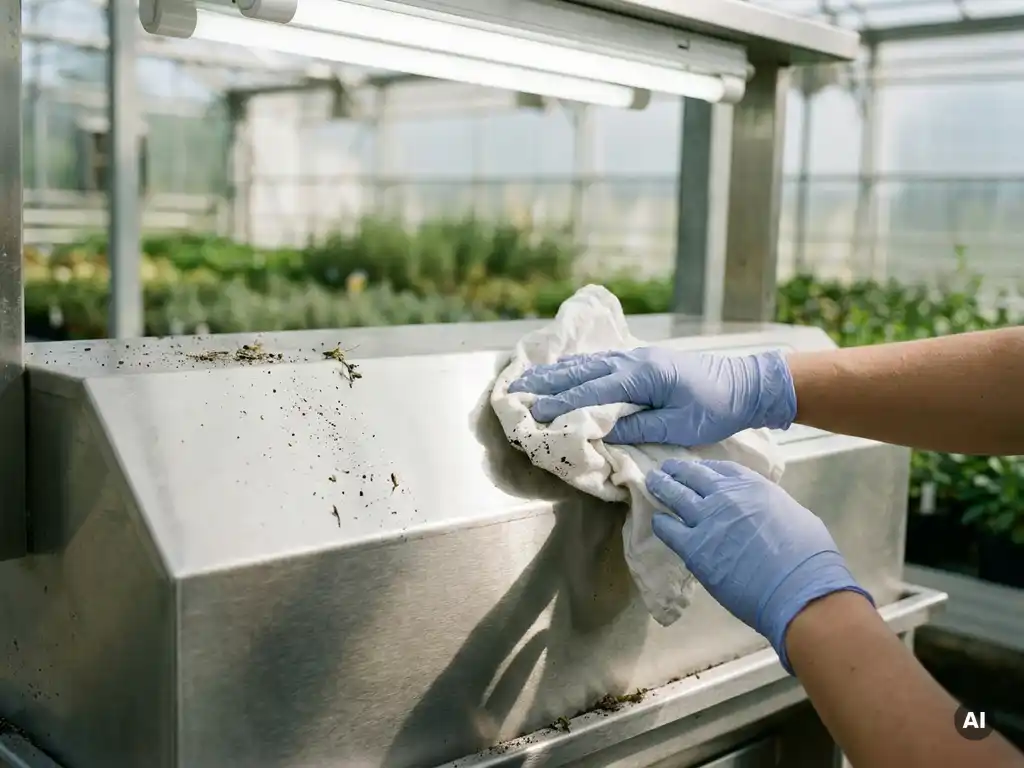
To clean a potting machine without causing damage, use compressed air, soft brushes, and dry or lightly damp cloths rather than high-pressure water jets. Water forced into electrical components, sensors, or bearing housings causes corrosion and short circuits. Always switch the machine off and isolate the power supply before beginning any cleaning procedure.
Start with dry removal: use a brush or compressed air to dislodge loose substrate from the hopper, filling mechanism, belt surface, and frame. Work from the top of the machine downward so dislodged material does not fall onto already cleaned surfaces. For stubborn compacted soil, a wooden or plastic scraper is safer than a metal tool, which can scratch coated surfaces or damage sensor housings.
For the belt or chain, a slightly damp cloth is usually sufficient to remove fine residue. Avoid soaking any area near drive motors, control panels, or touchscreen interfaces. After cleaning, check that all guards and covers are properly refitted before restarting. If your machine has a touchscreen control panel, wipe it only with a soft dry cloth, abrasive materials will scratch the surface and impair readability over time.
Can a regular cleaning routine extend the lifespan of a potting machine?
Yes, a consistent cleaning routine is one of the most effective ways to extend the working lifespan of a potting machine. Machines that are cleaned regularly experience less mechanical wear, fewer unplanned breakdowns, and lower overall maintenance costs than machines where cleaning is treated as optional or reactive.
The logic is straightforward: substrate that reaches bearings, chain links, or drive components acts as an abrasive. Over months and years, this grinds away at surfaces that would otherwise last far longer. Sensors that are kept clean maintain their calibration accuracy, which means the machine continues to fill pots consistently without requiring recalibration or replacement. A clean filling mechanism also reduces the load on the motor, which lowers energy consumption and reduces heat buildup in the drive system.
Industry experience across automated horticultural equipment consistently shows that machines operated with structured daily and weekly maintenance routines outlast neglected equivalents by a significant margin. For a capital investment of this size, a ten-minute clean per shift is a very low-cost form of asset protection.
How MartinStolze supports your potting machine maintenance
We design and build our potting machines entirely in-house, which means we know exactly which parts need the most attention and how to keep them running at full capacity. Whether you operate a Stolze 3030 or a Stolze 3030 PRO, we provide hands-on training in use and maintenance through our dedicated demo and training facility in De Lier. Our own technicians support you with installation, setup, and ongoing service, so you are never left to figure out a maintenance routine on your own.
- Structured maintenance guidance tailored to your substrate type and production volume
- Training in daily, weekly, and seasonal cleaning procedures for your specific machine configuration
- Access to our technicians for questions, service visits, and replacement parts
- Both purchase and rental options available, including trial periods for growers evaluating a new machine
- Seamless integration with conveyor systems and sorting lines for a complete, maintainable production setup
Want to know which potting machine and maintenance setup fits your operation best? Get in touch with our team and we will help you find the right solution.
Frequently Asked Questions
What is the best way to get started with a structured potting machine maintenance routine?
The easiest way to start is by attaching a simple checklist to the machine itself, covering the key cleaning tasks for each interval: shift-end, daily, and weekly. Tie your cleaning windows to breaks and shift changes that already exist in your workflow so they become habitual rather than reactive. If you are unsure what your specific machine requires, MartinStolze offers hands-on maintenance training at their facility in De Lier, which gives you a tailored routine from day one rather than a generic schedule.
Can I use a pressure washer to speed up the cleaning process?
No, pressure washers should be avoided on potting machines. High-pressure water forces moisture into bearing housings, electrical components, sensors, and control panels, leading to corrosion, short circuits, and sensor failure that can be far more costly to repair than the time saved during cleaning. Stick to compressed air, soft brushes, and lightly damp cloths for all routine cleaning, and reserve any wet cleaning for external, non-sensitive frame areas only.
How do I know if my potting machine's sensors are dirty and affecting fill accuracy?
The most common signs of sensor contamination are inconsistent fill levels across a production run, pots being skipped entirely, or the machine triggering false stops. If you notice fill weight or volume varying without any change in substrate or settings, dirty sensors are one of the first things to check. A simple wipe with a soft cloth is usually enough to restore accuracy, but if the problem persists after cleaning, the sensor may need recalibration or replacement.
What are the most common mistakes growers make when cleaning a potting machine?
The most frequent mistake is cleaning only the visible surfaces while ignoring the underside of the conveyor belt, the inside of the hopper, and enclosed chain paths where compacted substrate quietly accumulates. Another common error is using metal scrapers to remove hardened soil, which scratches coated surfaces and can damage sensor housings. Skipping the power isolation step before cleaning is also a serious safety risk that should never be overlooked, regardless of how brief the cleaning interval is.
Does a rental potting machine require the same level of maintenance as a purchased one?
Yes, the same cleaning and maintenance standards apply regardless of whether the machine is rented or owned. Neglecting maintenance on a rental machine leads to the same blockages, sensor inaccuracies, and mechanical wear, and may also result in additional charges for damage caused by poor upkeep. MartinStolze provides maintenance guidance for both rental and purchased machines, so you will have a clear picture of your responsibilities before the machine arrives on site.
How should I adjust my cleaning routine during peak season when production volumes are at their highest?
During peak season, increase your cleaning check frequency rather than reducing it to save time. High-volume runs generate more substrate residue per hour, meaning blockages and sensor fouling can develop faster than they would during a normal production week. Build shorter, more frequent checks into your schedule, such as every two hours instead of every shift, and ensure your team knows exactly which components to prioritise so each check stays quick and focused without cutting corners.
Are there any signs that a potting machine needs a service visit rather than just a routine clean?
Yes, there are several warning signs that go beyond what cleaning can address: unusual noise from the drive motor or chain system, visible belt misalignment or slipping, recurring sensor errors after cleaning, or a noticeable drop in fill consistency that does not improve after removing substrate buildup. These symptoms typically point to worn components, tension issues, or calibration drift that require a technician rather than a brush. If you notice any of these, contact your supplier promptly, as early intervention is almost always cheaper than waiting for a full mechanical failure.