

How to keep greenhouse efficiency high when seasonal workers are hard to find
Every grower knows the feeling: the season is ramping up, orders are piling in, and the vacancies you posted weeks ago are still open. When seasonal workers are scarce, greenhouse efficiency is often the first thing to slip. Plants wait longer to be potted, trolleys queue up, and your most experienced people spend their days walking and carrying instead of growing.
The good news is that labor shortages do not have to mean lower output. By looking closely at where hours go and automating the repetitive handling work, many nurseries keep production steady with a much smaller team. Here is a practical way to approach it.
Where Greenhouse Labor Hours Quietly Disappear
Most lost labor hours in a greenhouse come from internal transport and handling, not from the skilled work itself. Moving trays, carrying pots, repositioning trolleys and waiting for the next batch all add up, yet they rarely show up as a line item on any report.
Think about a typical potting day. One person feeds plants to the potting machine, another carries finished pots away, and a third restocks materials. Each step looks small, but together they tie up several people in work that adds no real value to the plant. Add seasonal peaks, and you also pay for training temporary staff who leave just as they become productive.
A useful exercise is to follow one batch of plants from arrival to dispatch and note every time a person touches it purely to move it. Count the steps, the walking distance and the idle waiting time. That simple walk-through often reveals more potential for improving greenhouse efficiency than any new piece of growing technology.
Automating Internal Transport First for Quick Wins
Automating internal transport is usually the fastest route to labor savings because it removes the most repetitive, physically demanding tasks without changing how you grow. A conveyor belt does the carrying, so your people can focus on the work that actually needs human judgment.
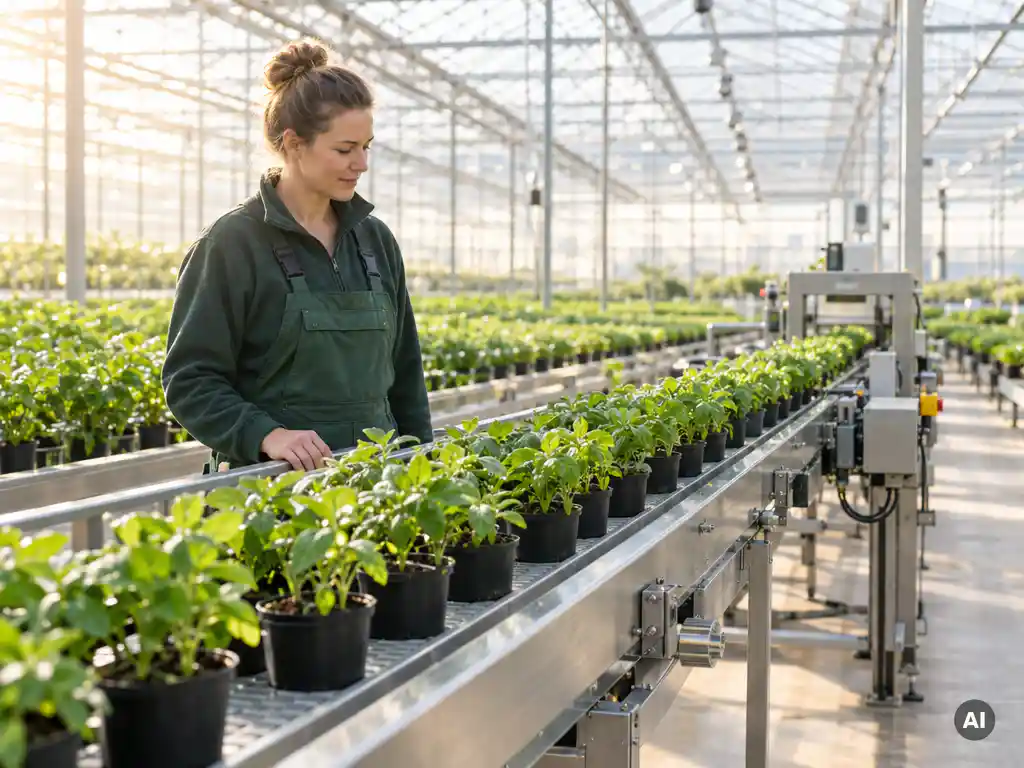
Several building blocks work well together. Conveyor belts move plants between workstations, buffer tables smooth out the flow so one slow step does not stall the whole line, and roller tracks handle crates and trays. Add work tables, scales or lighting, and a loose set of tasks turns into a coherent processing line.
The effect is easy to measure. Fewer people are needed for the same throughput, the work becomes lighter and more ergonomic, and sick leave tends to drop when nobody spends the day lifting. Starting with transport also keeps risk low, because it does not require you to rebuild your cultivation process around a machine.
A Step-by-Step Path from Mobile to Fixed Systems
The smartest way to automate is gradually: start with a flexible mobile conveyor, learn where it saves the most time, and only then build toward fixed systems. This keeps the investment proportional to what you have already proven works in your own greenhouse.
A mobile belt can be moved to wherever the bottleneck is this week. It lets you test layouts, find the natural rhythm of your team and see which handling steps cost the most hours. Once the pattern is clear, you can add buffer tables, link several belts together and eventually integrate potting machines or watering stations into a permanent line.
We have seen this approach work again and again in our 30+ years serving the horticulture sector. Because the products are designed to be combined, each step builds on the last instead of replacing it. Some of our customers have gone from 26 FTE to 6 FTE for the same output by growing their system in stages like this.
Testing Automation Through Rental Before Investing
Renting equipment lets you experience the real impact on your workflow before committing capital. For a family business where every investment is weighed carefully, that removes much of the uncertainty around automation.
Rental is especially useful during a peak period, when the pressure on staffing is highest and the benefits are easiest to see. You can compare a week with the belt to a week without it, using your own plants, your own layout and your own team. Questions like “Will my staff accept it?” and “Does it fit my greenhouse?” get answered by experience rather than guesswork.
If the numbers convince you, the step to buying or expanding is a small one, and the setup you tested can often grow with you. If you want to explore what a trial would look like in your situation, get in touch with us and we will think along with you about the best starting point.
Keeping Efficiency Stable During Seasonal Peaks
To keep greenhouse efficiency stable during peaks, build capacity into the process itself rather than relying on extra bodies. Automated transport handles a surge in volume without the hiring, training and scheduling headaches that come with temporary workers.
A well-designed line lets you scale output by adjusting speed and buffer capacity instead of adding people. Buffer tables absorb irregular supply, so the team keeps a steady pace even when plants arrive in waves. The same core crew can then cover busy weeks, with temporary help reserved for the tasks machines cannot do.
Looking ahead to the 2026 season and beyond, labor is unlikely to get easier to find or cheaper to hire. Growers who start automating internal transport now, even with a single mobile belt, build a more resilient operation with every season. The best first step is simple: map where your hours go, pick the biggest handling bottleneck, and test a solution there.
Frequently Asked Questions
How do I get started with automating internal transport if I have never used a conveyor belt before?
Begin with the walk-through exercise: follow one batch of plants from arrival to dispatch and note every moment someone handles it purely to move it. Pick the single biggest bottleneck, such as carrying finished pots away from the potting machine, and test one flexible mobile conveyor there. Measure hours and headcount before and after, and use those results to decide whether to add buffer tables or link more belts.
How do I calculate whether automation will pay off for my nursery?
Start by estimating the labor hours spent on pure handling per week, multiplied by your fully loaded hourly cost, including temporary staff training and recruitment. Then compare that to the cost of the equipment (or rental fee) and the hours it frees up at your current throughput. Running a rental trial during a peak week gives you real numbers from your own greenhouse instead of estimates, which makes the business case far more reliable.
What if my staff are skeptical or resist the new equipment?
Involve your team early by asking them where the heaviest and most repetitive tasks are, and place the first belt there so they feel the benefit immediately. Emphasize that automation takes over carrying and walking, not the skilled plant work, and that the job becomes lighter and more ergonomic. A short trial period also helps, since people tend to accept what they have experienced for themselves.
Will a conveyor system fit in my existing greenhouse layout?
In most cases yes, especially if you start with a mobile belt that can be repositioned as you learn where it works best. Measure your aisle widths, check the available floor space around potting machines and workstations, and note any trolley routes that must stay open. Testing the layout with a mobile or rented setup before building a fixed line lets you spot space issues before they become expensive.
What are common mistakes when automating greenhouse handling?
The most common mistake is automating everything at once instead of fixing the biggest bottleneck first. Another is ignoring buffer capacity, so one slow workstation still stalls the whole line. Also avoid choosing equipment that cannot be combined or extended later; modular components let you grow the system in stages as your needs change.
Can automation really keep output stable during seasonal peaks without extra temporary workers?
Yes, because a well-designed line scales by adjusting belt speed and buffer capacity rather than adding people. Buffer tables absorb irregular plant supply, so your core crew keeps a steady pace even when volumes surge. You may still need temporary help for tasks machines cannot do, but you will need far fewer people for transport and handling.
How should I prepare for the 2026 season if I want to reduce my labor dependency?
Do your handling analysis and choose your first bottleneck well before the peak starts, ideally in the quieter winter months. Arrange a rental trial or install a first mobile belt early enough that your team can get used to it before orders ramp up. Starting small now means you can expand with buffer tables or fixed lines during the season if the results justify it.