

How to test greenhouse efficiency gains by renting equipment first
Set a Baseline Before the Rental Starts
A trial only proves something if you know where you started. Measure your current performance for at least two to four weeks before the rented equipment arrives, so every later improvement has a fair point of comparison.
Focus on a handful of numbers that matter for your operation:
- Labor hours per 1,000 pots or trays for the process you want to improve
- Number of people working on that process line
- Throughput per hour, measured on a normal day and on a peak day
- Error and damage rates, such as dropped plants or mislabeled trays
- Sick leave and physical strain reported for the heaviest tasks
Write these figures down in a simple spreadsheet and keep measuring the same way throughout. Consistency beats precision here: a rough number measured identically every time is more useful than a perfect number measured once.
Choose Rental Equipment That Fits Your Bottleneck
The best rental choice targets the single step that costs you the most time or people. Resist the urge to automate everything at once, because a trial with too many variables makes it impossible to see what actually made the difference.
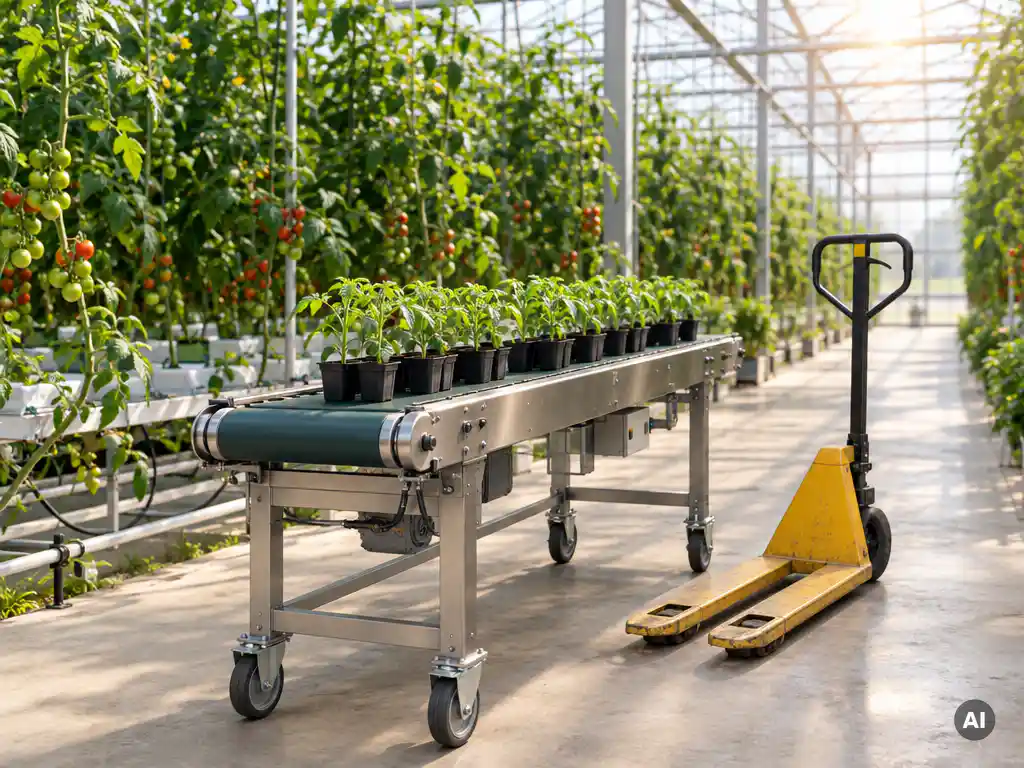
Look at your baseline and ask where plants wait, where people carry or push loads, and where the line slows to the pace of its slowest step. For many nurseries, that point is internal transport between potting, watering, and dispatch. A flexible conveyor belt is often the easiest entry point here, since it can be positioned in an existing layout without rebuilding anything. You can explore the options in our range of conveyor belts, which can be combined with work tables, scales, and lighting as your line develops.
If you are unsure which step to tackle first, talk it through with someone who knows greenhouse workflows. We regularly help growers pinpoint the right starting point before anything is delivered.
Run a Trial Period That Produces Real Data
A good trial runs long enough to cover normal days, busy days, and the small disruptions that every greenhouse sees. Aim for at least four weeks, and where possible include a seasonal peak, because that is when automation proves its value.
Keep conditions realistic
Run the equipment with your own team, your own crops, and your own schedule. A trial staged under ideal conditions tells you little about daily reality. Let the people who will use the equipment every day take part from the first shift, and ask for their feedback weekly.
Measure the same things, the same way
Use the exact metrics from your baseline. Log labor hours, throughput, and errors daily, and note anything unusual, such as a delayed delivery or a crew member out sick. Those notes help you separate genuine gains from random noise when you review the results.
Turn Trial Results Into an Investment Decision
The decision comes down to a direct comparison: what did the process cost before, what does it cost now, and how long until the difference pays for the equipment? Put the baseline and trial figures side by side to answer that clearly.
Start with labor. Calculate the hours saved per week, multiply by your true hourly cost including temporary agency rates and overtime, and project that over a year. Then add the softer gains: less physical strain, fewer errors, and the ability to handle peaks without hiring. Weigh the total against the purchase price and the rental fees already paid, and you have a realistic payback period.
Some growers see dramatic outcomes. In our own projects, customers have gone from 26 to 6 FTE for the same output, though results always depend on the starting setup. Your trial data tells you what is realistic for your nursery, which is far more valuable than any general claim.
Common Pitfalls When Testing Rented Automation
Most failed trials share the same few causes, and nearly all of them are avoidable. Knowing them in advance saves weeks of misleading results.
- Skipping the baseline. Without a starting measurement, any improvement is just an impression.
- Testing too briefly. One quiet week hides how the equipment copes with peak pressure.
- Ignoring the team. If staff are not trained or consulted, resistance can sink a good solution.
- Changing too many things at once. New layouts, new crops, and new equipment together make results unreadable.
- Judging by the first days. Every new process has a learning curve, so look at the trend rather than day one.
Planning for these from the start keeps the trial honest and the conclusions reliable.
Scale Up Step by Step After a Successful Test
A positive trial rarely means buying a complete system the next day. The most dependable path is to grow in stages: keep the proven mobile solution, add the next link in the chain, and move toward fixed installations once the layout and workflow are settled.
Many growers begin by renting a mobile conveyor during a peak period, then buy it, then add buffer tables, potting machines, or watering stations as budgets and needs allow. Because the components are designed to work together, each step builds on the last instead of replacing it. That keeps investment manageable while efficiency climbs with every addition.
Ready to test what automation could do for your nursery in 2026? Get in touch with our team and we will help you choose a rental setup, plan the trial, and read the results together.
Frequently Asked Questions
How do I get started with a rental trial if I have never used automation before?
Start small and specific. Pick the one process that costs you the most labor, such as internal transport between potting and dispatch, and record your baseline numbers for two to four weeks. Then contact a supplier to discuss which rental equipment fits that bottleneck, and agree on a trial length of at least four weeks so you can capture both normal and busy days.
What if my team is skeptical or resistant to the new equipment?
Involve the people who will use the equipment daily from the very first shift, not just at the end. Give them proper instruction, ask for weekly feedback, and act on practical suggestions, such as adjusting belt height or the position of work tables. When staff see that the equipment removes the heaviest tasks rather than their jobs, acceptance usually grows quickly.
What should I do if the results look disappointing in the first week or two?
Don’t judge the trial by the first days, because every new process has a learning curve. Look at the trend in your daily logs and check whether the layout, crew training, or equipment settings can be improved. If the trend is still flat after several weeks, review whether you picked the right bottleneck before drawing conclusions.
How do I calculate a realistic payback period from my trial data?
Multiply the weekly labor hours saved by your true hourly cost, including temporary agency rates and overtime, and project that over a year. Add measurable extras such as fewer damaged plants or avoided seasonal hires. Divide the purchase price, minus any rental fees already paid, by the annual saving to get your payback period in months or years.
Can I trial more than one piece of equipment at the same time?
It’s better not to. Testing several changes at once makes it impossible to tell which one produced the improvement. Trial one solution, such as a mobile conveyor belt, measure the result, and only then add the next element, like a work table or scale, so each step has its own clear data.
Does it make sense to rent during a seasonal peak even if I'm not sure I'll buy?
Yes, a peak period is actually the most valuable time to test, because that’s when labor shortages and temporary staffing costs are highest. Renting lets you cover the peak with less pressure on your team while collecting data under real stress. If the numbers don’t justify a purchase, you’ve still solved a seasonal problem without a long-term commitment.
How do I know when to move from mobile equipment to a fixed installation?
Move to fixed installations once your layout, crop mix, and workflow have stayed stable for a full season and the mobile solution has proven itself. Until then, mobile equipment gives you flexibility to adjust. Choose components designed to work together so the fixed setup builds on what you already own instead of replacing it.