

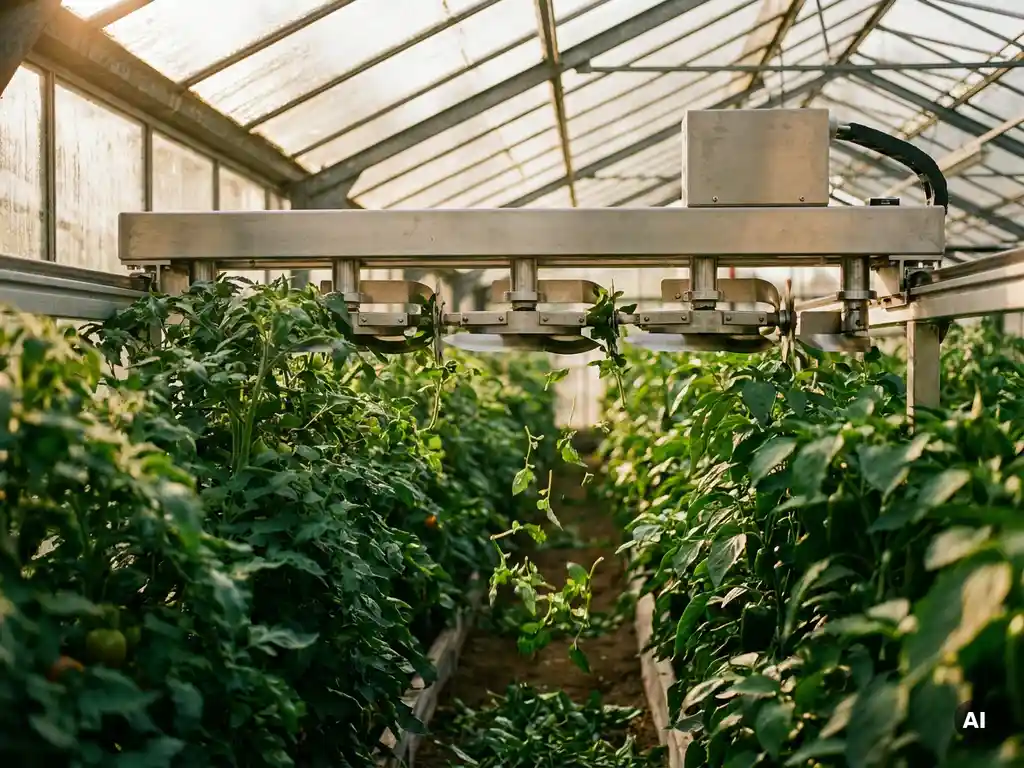
What crops benefit most from an automated topping machine?
Crops that benefit most from an automated potting machine are ornamental plants and pot plants grown at high volumes, including bedding plants, herbs, vegetable seedlings, and flowering pot plants. These crops share a common need: consistent soil density, high throughput, and repeatable pot fill quality that manual potting simply cannot deliver at scale. The sections below unpack which plant types, pot sizes, and growing conditions get the most from automation.
Which plant types are best suited for machine potting?
The plant types best suited for machine potting are those grown in large, uniform batches where consistency and speed directly affect product quality and profitability. Ornamental pot plants, bedding plants, herbs, and vegetable transplants are the strongest candidates. These crops are typically potted in standardized containers, follow predictable seasonal schedules, and require uniform soil fill to ensure even root development and presentation at the point of sale.
Crops with irregular root structures or very large container sizes, such as mature shrubs or specimen trees, are less suited to automated potting because the physical variation between plants makes it harder to standardize the process. However, for the vast majority of commercial greenhouse growers working with smaller pot sizes and high daily volumes, the match is excellent.
- Ornamental pot plants (e.g. chrysanthemums, cyclamen, poinsettias): high volume, tight delivery windows, quality-sensitive
- Bedding plants and seasonal flowers: peak-season demand requires rapid throughput
- Herbs and vegetable seedlings: uniform fill is critical for consistent germination and growth rates
- Young plant propagation: tray fillers and potting machines work together to handle plug plants efficiently
Why do ornamental growers see the biggest gains from automation?
Ornamental growers see the biggest gains from potting automation because their business model depends on two things that manual potting cannot reliably deliver: consistent aesthetic quality and high-volume throughput during narrow seasonal peaks. A chrysanthemum or poinsettia that arrives at auction with uneven soil fill or poor presentation loses value immediately, and auction timing is non-negotiable.
Manual potting introduces variation between workers, particularly during long shifts or when temporary seasonal staff are involved. One employee fills pots tighter, another looser, and the result is inconsistent root development and uneven plant appearance. An automated potting machine eliminates that variation entirely, filling every pot to the same depth and density regardless of who is operating the line.
The labour dimension is equally significant. Ornamental growing is highly labour-intensive during peak periods, and finding enough skilled seasonal workers is increasingly difficult. Automation allows a smaller, permanent team to handle volumes that would previously have required many more hands, reducing both cost and dependency on the seasonal labour market.
How does soil mix type affect potting machine performance?
Soil mix type has a direct impact on potting machine performance, particularly in how consistently the machine can fill each pot. Mixes that are too dry, too fibrous, or contain large bark particles can cause bridging in the hopper, uneven flow, and inconsistent fill depth. Mixes with high peat or coir content generally run more smoothly, while heavily amended or chunky substrates require a machine built to handle that variation.
This is one of the most common frustrations growers report with lower-specification machines: the machine performs well with standard mixes but begins to struggle the moment a grower switches to a coarser or drier blend. The result is stoppages at exactly the wrong moment, typically during a peak production run.
A well-engineered potting machine accounts for substrate variation through adjustable feed speed, auger design, and, in more advanced models, automatic soil detection that monitors fill level in real time and adjusts accordingly. When evaluating a machine, always test it with your actual growing substrate, not just a standard reference mix.
What pot sizes and volumes does a potting machine handle?
Most professional potting machines handle pot sizes ranging from approximately 7 cm to 30 cm in diameter, covering the vast majority of commercial ornamental and vegetable growing applications. Throughput capacity varies significantly by model, with high-performance machines capable of processing up to 8,000 pots per hour when running in dual or alternating mode.
The ability to switch between pot sizes quickly is a practical consideration that is often underestimated during the buying decision. A machine that requires lengthy manual reconfiguration every time you change pot size creates downtime that erodes the efficiency gains automation is supposed to deliver. Look for machines where pot size, bore depth, and rotation speed can be pre-programmed and recalled from a touchscreen menu.
Volume requirements should also drive the conversation. A grower potting 500 plants a day has very different needs from one running 5,000. Matching machine capacity to actual daily volume, including realistic peak-day requirements, prevents both underinvestment and unnecessary over-specification.
When does renting a potting machine make more sense than buying?
Renting a potting machine makes more sense than buying when your potting volume is concentrated in a short seasonal window, when you are evaluating automation for the first time and want to reduce financial risk, or when you need a machine immediately while a purchase decision is still being finalized. Rental gives you access to professional-grade equipment without a full capital commitment upfront.
For growers who are hesitant about automation because of a previous disappointing experience with a cheaper machine, a rental period also functions as a low-risk proof of concept. You can run the machine with your actual substrate, your actual pot sizes, and your actual team before committing to ownership.
Buying makes more sense when potting runs year-round or across multiple extended seasons, when the machine will be integrated into a permanent production line, or when the total cost of repeated rentals over time approaches or exceeds the purchase price. The right answer depends on your production calendar, cash flow position, and how central potting is to your daily operation.
What’s the difference between a standard potting machine and a PRO model?
The key difference between a standard potting machine and a PRO model is the level of automation, precision, and ease of operation built into the machine. A standard model handles the core task reliably, while a PRO model adds features that reduce manual intervention, improve fill consistency, and lower long-term maintenance requirements.
In practical terms, the PRO model typically includes automatic soil detection that monitors and adjusts fill level in real time, a fully guided chain for greater mechanical stability, pre-programmable settings for different pot sizes and bore depths via a touchscreen, quieter operation, and reduced maintenance needs. These are not luxury features for most commercial growers; they are the difference between a machine that runs smoothly across a full production day and one that requires constant operator attention.
The choice between standard and PRO often comes down to daily volume and substrate complexity. For growers running straightforward mixes at moderate volumes, a standard machine may be entirely sufficient. For high-volume operations, complex substrates, or situations where operator attention is a limited resource, the PRO model pays for itself through fewer stoppages and more consistent output.
How MartinStolze helps you find the right potting solution
We design and build our potting machines entirely in-house, from concept and programming through to assembly and installation. That means when you ask us about soil mix compatibility, pot size range, or the difference between our Stolze 3030 and Stolze 3030 PRO, you get answers from the people who actually built the machine, not a sales intermediary.
- Full range of pot sizes: both models handle pots from 7 to 30 cm, running single, double, or alternating
- Up to 8,000 pots per hour in high-capacity configuration
- Seamless integration with our conveyor systems and sorting lines for a complete automated production line
- Buy or rent, including a trial period so you can test the machine with your actual growing conditions before committing
- On-site support from our own technicians, plus hands-on training at our demo facility in De Lier
Whether you grow ornamentals, herbs, or vegetable transplants, and whether you are automating for the first time or replacing an older machine, we will help you find the configuration that fits your crop, your substrate, and your production schedule. Get in touch with our team to discuss your situation and arrange a demonstration.
Frequently Asked Questions
How long does it typically take to train staff to operate a potting machine?
Most operators can learn the basic functions of a professional potting machine within a single day, particularly on models with a touchscreen interface where pot size and bore depth settings are pre-programmed and easy to recall. For more advanced features such as substrate feed adjustments or integration with conveyor lines, a short hands-on training session at the manufacturer’s facility is the most effective approach. MartinStolze, for example, offers on-site training at their demo facility in De Lier, which allows your team to work with the actual machine before it arrives in your greenhouse.
Can a potting machine handle pots that are already partially filled or repotting scenarios?
Standard automated potting machines are designed and optimised for filling empty, clean pots from scratch, which is the most common commercial use case. Repotting into containers that already have root balls or existing substrate is generally not suited to automated line potting because of the physical variation between individual plants. For repotting at scale, growers typically use the machine for the substrate top-up stage only, or handle that crop type manually while running other batches through the machine.
What maintenance does a potting machine require, and how often?
Day-to-day maintenance is minimal and mainly involves cleaning substrate residue from the hopper, auger, and feed mechanisms at the end of each production run to prevent compaction or clogging. More thorough inspections of the chain, drive components, and sensors should be scheduled periodically depending on daily usage intensity. PRO models are specifically engineered to reduce maintenance frequency through a fully guided chain and more robust mechanical design, which is a meaningful advantage for operations running the machine across long production days or multiple shifts.
What happens if my substrate mix changes between growing seasons — do I need to reconfigure the machine?
Yes, switching to a different substrate mix will typically require some adjustment to feed speed and fill settings, but on well-engineered machines this process is straightforward rather than disruptive. On models with pre-programmable settings, you can save a separate profile for each substrate type and switch between them quickly without manual recalibration from scratch. The most important step is always to test the machine with the new mix before a peak production run, so any adjustments can be made without time pressure.
Is it possible to integrate a potting machine with an existing conveyor or production line, or does it need to be a standalone setup?
Integration with an existing conveyor or production line is entirely possible and is the preferred setup for high-volume operations, as it eliminates manual pot handling between stages and keeps throughput consistent across the full line. The key consideration is matching conveyor speed and pot spacing to the output rate of the potting machine so there are no bottlenecks in either direction. If you are working with an existing line rather than building from scratch, it is worth discussing the technical specifications with the machine manufacturer directly to confirm compatibility before purchase.
At what daily potting volume does automation start to make financial sense?
There is no single universal threshold, but most growers find that automation begins to deliver a clear return on investment when daily volumes consistently exceed 1,000 to 1,500 pots, particularly when that volume is concentrated in seasonal peaks that require additional labour. Below that level, the labour saving may not offset the capital or rental cost quickly enough to justify the investment. The calculation also depends on your current labour costs, substrate waste from inconsistent manual filling, and the value of the crop — high-value ornamentals tip the balance toward automation at lower volumes than lower-margin vegetable seedlings.
What should I look for when testing a potting machine before buying or committing to a rental?
The most important thing is to test the machine with your own substrate, your own pot sizes, and a realistic production volume rather than a controlled demonstration setup with ideal conditions. Pay close attention to fill consistency across a run of at least several hundred pots, how the machine handles the start and end of a hopper load, and how quickly settings can be changed when switching between pot sizes. Also observe how the machine behaves after running continuously for an hour or more, as some issues with bridging, inconsistent fill, or mechanical noise only become apparent once the machine has been running under real production conditions.