
Why greenhouse efficiency matters more as skilled workers become scarce
The Hidden Cost of Every Vacancy Left Open
An open vacancy costs far more than the salary you are not paying. It shows up as overtime for the people who are there, expensive temporary staff during peaks, missed orders and slower throughput. When a position stays open for months, those costs quietly pile up.
There is a human side too. Teams that carry extra work get tired, and physically demanding tasks lead to sick leave and turnover. Every person who leaves takes knowledge with them, and training a replacement eats into the very hours you were already short on. That is why many growers now see labor scarcity as a structural issue rather than a temporary dip.
Where Greenhouse Hours Quietly Disappear
Most lost hours disappear in repetitive internal transport and handling, not in the skilled growing work itself. Moving trays, carrying pots, feeding potting lines and shuffling plants between zones can take up a surprising share of the working day.
These tasks rarely get measured because they feel like part of the job. Yet when you walk the floor with a stopwatch, you often find people waiting for the next batch, lifting the same loads dozens of times per shift, or covering long distances with a cart. This kind of work adds little value, wears people out and is exactly the type of task that scales badly when workers are scarce.
The Seasonal Peak Problem
Peaks make the problem worse. When volumes spike, the answer is usually more temporary staff, who need instruction and work at a lower pace at first. Smoothing out transport flows reduces how much extra labor a peak actually requires.
How Automated Internal Transport Saves Labor
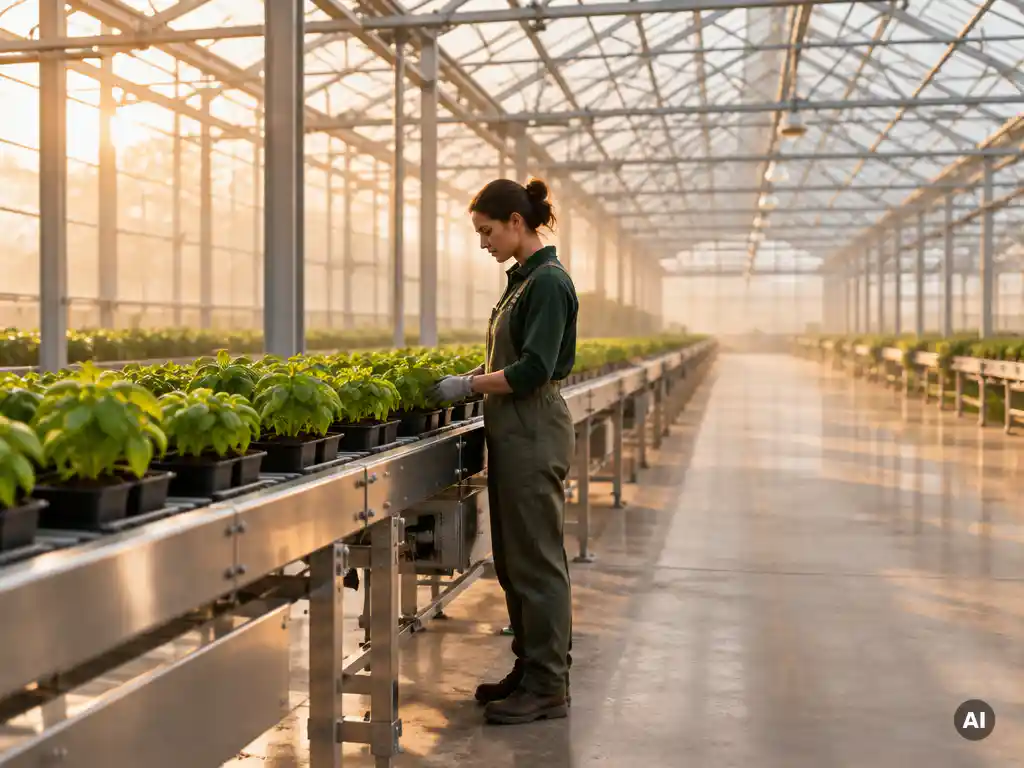
Automating internal transport saves labor by letting machines handle the repetitive moving and buffering, so people can focus on tasks that truly need hands and judgment. A well-designed line keeps plants flowing at a steady pace without anyone pushing carts or lifting trays.
In practice this means conveyor belts, buffer tables, potting machines, roller conveyors and watering stations that work together as one system. Because these components can be combined with work tables, scales and lighting, a line can be shaped around your specific process. We build these machines in our own workshop in De Lier, and our conveyor belt range is a common starting point for growers who want to see results quickly.
The effect on staffing can be dramatic. Some of our customers went from 26 to 6 FTE for the same output, simply because the flow of material no longer depended on manual labor. It also makes the work more ergonomic, which helps with retention and absenteeism, two things that matter just as much as headcount.
Starting Small With Mobile Conveyors and Rental
You do not need to automate everything at once. The most practical route is to start with a mobile conveyor on one bottleneck, see what it does for your daily routine, and build from there.
Renting equipment for a peak period is a low-risk way to experience the difference before making an investment. Growers can test how a mobile belt fits their layout, how the team responds and how many hours it frees up. Many then move step by step towards fixed systems that become the backbone of the production process.
This stepwise approach also keeps things manageable for busy owners who are unsure where to begin. Hardware, software and installation come from one source, so there is no juggling of multiple suppliers. If you want to talk through which bottleneck to tackle first, you can get in touch with our team for practical advice.
Staying Competitive as the Labor Market Tightens
Growers who improve their greenhouse efficiency now will be better placed when labor gets even scarcer, because they will need fewer people to deliver the same volume. Wages keep rising and margins keep shrinking, so the gap between automated and manual operations tends to widen with time.
Competitors with streamlined internal logistics can produce faster and at lower cost, which puts pressure on everyone else’s pricing. Automation is not about replacing the people who make a nursery special. It is about protecting them from the heaviest, most repetitive work and making sure the business can keep growing even when the vacancy list stays long.
The next step does not have to be big. Pick the one transport task that eats the most hours, measure it honestly and look at what a mobile solution could change in 2026. Small, well-chosen improvements compound quickly, and they put you in control of your own capacity again.
Frequently Asked Questions
How do I figure out which transport task in my greenhouse to automate first?
Walk the floor with a stopwatch and log how long each repetitive handling task takes over a typical day and a peak day. Look for tasks where people wait for the next batch, lift the same loads many times, or cover long distances with carts. The task that combines the most hours with the most physical strain is usually the best first candidate, since it offers the quickest payback.
What is the best way to measure whether automation is actually saving labor?
Record a baseline before you change anything: hours spent, number of people involved, plants or trays handled per hour, and sick leave linked to physically demanding tasks. Repeat the same measurements 4 to 8 weeks after installing the equipment, ideally during a similar volume period. Comparing output per labor hour, rather than just total hours, gives the clearest picture of the real gain.
Is renting a mobile conveyor really worth it for a short seasonal peak?
Yes, renting is a low-risk way to test how a mobile belt fits your layout and how your team responds before committing to an investment. Compare the rental cost to what you would otherwise spend on temporary staff, training time and overtime during the peak. If the hours freed up are significant, you have solid evidence for a permanent solution.
How do I get my team on board with automated transport?
Position the change as a way to remove the heaviest, most repetitive work rather than to replace people. Involve experienced employees early, ask where they lose the most time or feel the most strain, and let them test the equipment during a trial period. Teams that see their own pain points solved tend to become the strongest advocates.
What should I check before adding conveyors or buffer tables to an existing greenhouse layout?
Map your current plant, pot and tray flows, available floor space, aisle widths and any points where equipment must pass through doors or between zones. Think about where buffering is needed so that upstream and downstream steps can run at their own pace. A supplier who can combine conveyors, work tables, scales and lighting can help you shape a line around your specific process.
What are common mistakes growers make when starting with automation?
The most common mistakes are trying to automate everything at once, skipping the measurement of current processes, and choosing equipment without considering how it connects to the next step in the flow. Another pitfall is working with several separate suppliers, which makes integration harder. Starting with one bottleneck and expanding step by step keeps risk and complexity under control.
Can automation help with retention and absenteeism, or only with headcount?
It helps with both. Taking over repetitive lifting and carrying makes the work more ergonomic, which can reduce sick leave and physical fatigue. A less strenuous workplace is also easier to recruit for and helps you keep experienced staff, whose knowledge is costly to replace.