
Why greenhouse efficiency projects stall and how growers can avoid it
Hidden Bottlenecks Behind Stalled Greenhouse Upgrades
Most efficiency projects stall because of unclear scope, missing ownership, and a gap between the plan and the real workflow on the floor. The technology itself is rarely the problem.
A common trap is trying to fix everything at once. When a plan covers potting, watering, buffering, and transport in a single leap, the budget balloons and the decision keeps getting postponed. Another hidden bottleneck is the lack of a clear owner. If automation is “everyone’s priority,” it quickly becomes no one’s responsibility.
Then there is the information problem. Many growers simply do not know where the biggest time loss sits. Without a clear picture of how many hands touch a tray between the potting line and the shipping area, it is hard to decide what to automate first.
Why Good Intentions Lose to Daily Operations
Daily operations win because they are urgent, while improvement projects are merely important. In a nursery, urgent always takes priority: orders need to ship, plants need water, and shifts need to be covered.
Labor shortages make this worse. When vacancies stay open for months, the same people who would help plan an upgrade are the ones holding the operation together. Seasonal peaks add pressure, and the project that was supposed to ease the workload ends up competing with it for time and attention.
There is also a quieter factor: risk. Investing in fixed systems feels like a big commitment, especially for family businesses that watch every euro. Hesitation is understandable, but waiting has a cost too. Rising wages, absenteeism from physically heavy work, and expensive temporary staff drain margins every season the project stays on the shelf.
Starting Small With Mobile Conveyors and Rentals
The easiest way to break the stalemate is to start with a low-commitment step, such as a mobile conveyor or a rental during a peak period. This lets a grower experience the benefits before making a larger investment.
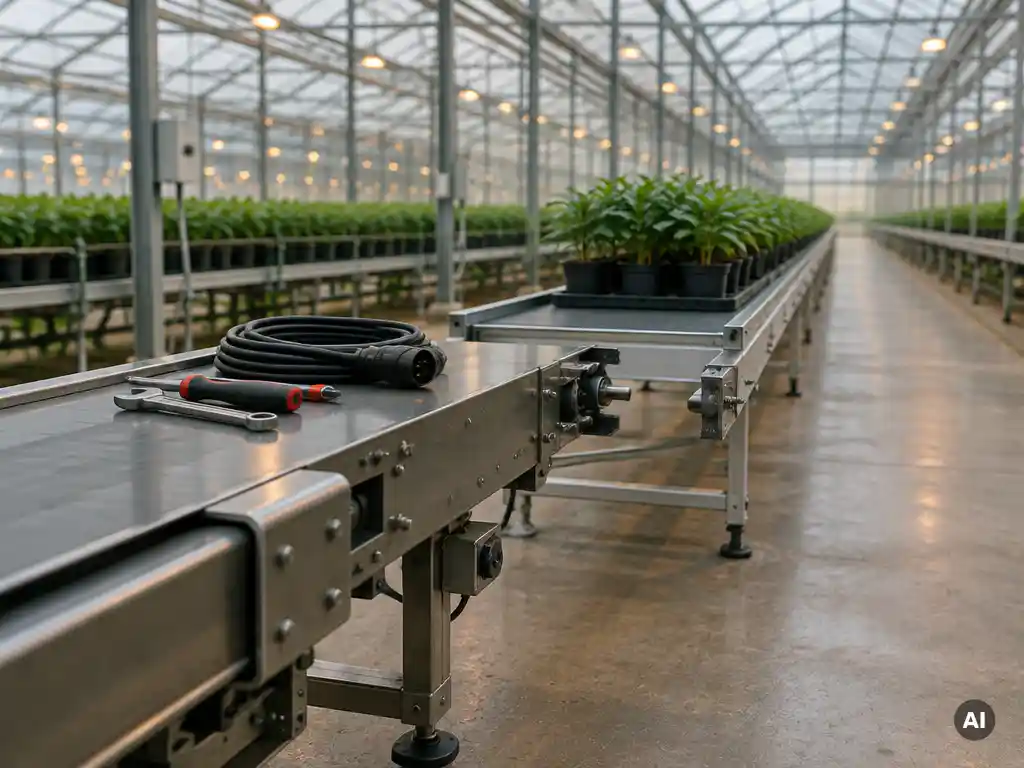
A mobile belt can be placed where it relieves the most pressure, moved when the workflow changes, and tested under real conditions. Renting during a busy season removes the financial hurdle and replaces guesswork with evidence: how much walking disappears, how much lifting is avoided, and how many people the line really needs.
This is the approach we encourage at MartinStolze. Many of our customers begin with a flexible solution from our range of conveyor belts and grow step by step into fixed systems once the results speak for themselves. It turns a big, abstract decision into a small, practical one.
Planning Internal Transport Automation That Actually Gets Finished
Automation projects get finished when they are broken into phases with a defined scope, a named owner, and a schedule that respects the growing calendar. Planning around the business rhythm matters as much as planning the equipment.
Map the flow before choosing machines
Start by following a product from start to finish and noting every manual handover. The points where plants wait, pile up, or get carried by hand are the best candidates for automation. This simple walk-through often shows that a few well-placed conveyors or buffer tables deliver more than a complete redesign.
Phase the project around the season
Schedule installation in quieter periods and keep each phase small enough to complete before the next peak. A finished phase that works is worth more than an ambitious plan that never leaves the drawing board.
It also helps to work with one partner who handles hardware, installation, and coordination. When everything comes from a single source, fewer things fall between the cracks and the timeline stays realistic. If you are unsure where to begin, you can get in touch with our team and we will help you think through the most sensible first step.
Keeping Teams on Board During Change
Teams support automation when they understand that it takes over the heavy, repetitive work rather than their jobs. Early involvement and clear communication make the difference between resistance and enthusiasm.
Ask employees where the work hurts most. They know which tasks cause back strain, which steps slow the line down, and which workarounds have crept in over the years. Including their input improves the design and gives people a sense of ownership over the result.
Be honest about what changes. Ergonomic improvements, less lifting, and fewer rushed peaks are real benefits, and they help with retention in a tight labor market. Offer short, hands-on training when a new line arrives so nobody feels left behind.
Turning One Finished Project Into Lasting Momentum
A completed first project builds confidence, proves the numbers, and makes the next step far easier to approve. Momentum is the real payoff of finishing small.
Once a mobile belt or a buffer table is running, measure what changed: hours saved, fewer temporary workers, smoother peaks. Those figures turn future decisions from opinions into arguments. Some growers have gone on to produce the same output with a fraction of the staff they once needed, but it always began with one step that actually got completed.
From there, the path is clear. Add the next link in the chain, connect existing equipment, and let greenhouse efficiency grow in layers rather than in one risky leap. Projects that finish create habits of improvement, and that habit is what keeps a nursery competitive year after year, in 2026 and beyond.
Frequently Asked Questions
How do I figure out where to start if I want to automate internal transport in my greenhouse?
Begin with a simple walk-through: follow one tray or pot from the potting line to the shipping area and write down every manual handover. Count how many people touch the product and how far it is carried by hand. The spots where plants wait, pile up, or require heavy lifting are your best first candidates, and they often point to one or two well-placed conveyors rather than a full redesign.
How long should I rent or trial a mobile conveyor before deciding on a fixed system?
Aim to test through at least one full peak period, or a few weeks of normal high-volume work, so you see the equipment under real pressure. During the trial, track concrete numbers such as hours spent on internal transport, the number of people needed on the line, and how often tasks get delayed. If the figures show a clear and repeatable gain, you have a solid business case for a permanent installation.
Who should own an automation project inside a small or family-run nursery?
Assign one named person who has both the time and the authority to make decisions, such as a production manager, head grower, or the owner. Give them a clear scope, a realistic deadline, and a short list of success measures. If that person is also running daily operations, protect a fixed weekly slot for the project so urgent tasks do not swallow it.
What if my team is resistant to new equipment?
Resistance usually comes from fear that the technology replaces jobs or makes work more complicated. Ask employees which tasks cause the most strain or frustration, involve them in choosing where the first conveyor goes, and explain that the goal is to remove heavy, repetitive work. A short, hands-on training session when the equipment arrives also helps people feel confident from day one.
How can I measure whether a first automation step was worth it?
Record a baseline before installation: labor hours per task, number of temporary workers, and throughput during peaks. After a few weeks of use, compare the same figures and add softer indicators such as sick leave related to physical strain or overtime. Even small, documented improvements make it much easier to justify the next phase.
What are the most common mistakes when phasing an automation project?
The biggest mistakes are making the first phase too large, scheduling installation right before a seasonal peak, and splitting responsibility across too many suppliers. Keep each phase small enough to finish in a quiet period, define success criteria in advance, and where possible work with one partner who handles hardware, installation, and coordination.
Can a mobile conveyor later be integrated into a fixed system?
In many cases, yes. Mobile belts can continue to serve as flexible links, for example at buffer points or seasonal workstations, while fixed lines are added around them. When planning your first step, share your longer-term goals with your supplier so the equipment you start with fits into the larger flow later on.