
How do conveyor belts handle moisture and soil in horticulture?
Horticulture is one of the most demanding environments you can put a conveyor belt in. Between constant moisture, soil and substrate that get everywhere, and the sheer volume of plants moving through a nursery or packaging centre every day, standard industrial equipment simply does not hold up. That is why choosing the right conveyor belt for horticulture is not just a purchasing decision — it is an operational one that affects your productivity, your team’s wellbeing, and your bottom line.
Whether you are managing a greenhouse, running a distribution centre, or overseeing a vegetable and fruit processing line, the questions below cover everything you need to know about how conveyor belts perform in real horticultural conditions. We have answered each one directly, so you can find what you need quickly and make informed decisions with confidence.
What makes greenhouse environments so tough on conveyor belts?
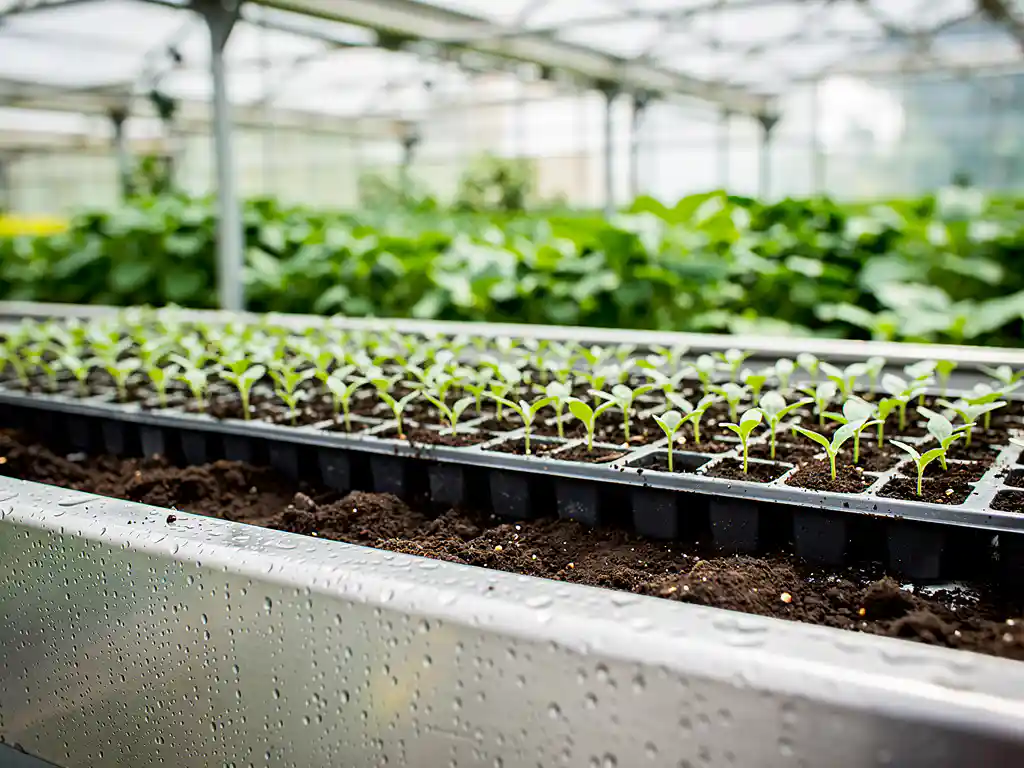
Greenhouse environments combine persistently high humidity, water exposure, fine soil particles, and heavy daily use — a combination that accelerates wear, promotes corrosion, and causes standard conveyor belts to fail far sooner than expected. Unlike dry industrial settings, a greenhouse offers almost no respite from moisture, and cleaning routines introduce additional water pressure and chemical exposure.
The challenge goes beyond dampness. Greenhouses operate at elevated temperatures for extended periods, which can cause certain plastics and rubbers to degrade faster than their specifications suggest. Soil and substrate particles work their way into bearings, drives, and belt surfaces, creating friction and blockages that compound over time. Electrical components face condensation risks, and metal frames that are not properly treated will begin to corrode within a relatively short period.
There is also the operational rhythm to consider. Conveyor belts in horticulture do not run for a few hours and then sit idle. In busy nurseries and packaging centres, they run continuously across long shifts, often six or seven days a week during peak seasons. That intensity amplifies every weakness in a system not designed for the environment. Equipment built for general industry tends to underestimate this combination of factors — which is precisely why purpose-built horticultural conveyor systems perform so much better in practice.
How do conveyor belts handle moisture without breaking down?
Conveyor belts designed for horticulture handle moisture by using corrosion-resistant frames, waterproof electrical components, sealed bearings, and belt materials that do not absorb water or degrade when wet. The key is that every component must be selected with moisture exposure as the baseline condition, not an exception.
Stainless steel and hot-dip galvanised steel are the most common frame materials in horticultural conveyor systems because they resist the oxidation that destroys ordinary mild steel in humid conditions. Belt surfaces are typically made from food-grade or agricultural-grade plastics and rubbers that repel water rather than absorbing it, which also makes cleaning easier and more effective.
Sealed bearings are particularly important. Open bearings in a wet environment will collect water and fine particles, leading to premature failure. Motors and control boxes need IP-rated enclosures that prevent water ingress, especially in environments where overhead irrigation or pressure washing is routine. When all of these elements are combined in a system engineered specifically for greenhouse conditions, moisture stops being a threat and becomes just another part of the working environment that the equipment handles without complaint.
What types of soil and substrate can conveyor belts cope with?
Horticultural conveyor belts can handle a wide range of growing media, including peat-based compost, coir, bark, perlite, rockwool, and mixed potting substrates. The critical factors are belt surface texture, cleaning access, and the design of the belt edges and frame to prevent material build-up in hard-to-reach areas.
Fine substrates like perlite or coir fibres present a different challenge from heavier compost mixes. Lighter particles become airborne and settle into mechanical components, while heavier, wetter compost can stick to belt surfaces and create imbalance or slippage. A well-designed horticultural conveyor addresses both by using belt profiles that release material cleanly and frames with open structures that do not trap debris.
Rockwool slabs and plugs, common in hydroponic and cut-flower production, require smooth belt surfaces that do not snag the material or disrupt delicate root systems. Pot-filling lines that handle loose substrate need consistent belt tension and speed control to prevent spillage and maintain throughput. The diversity of growing media used across horticulture is one of the reasons conveyor systems designed for this sector need to be adaptable — a single belt profile or speed setting rarely works for every application on the same site.
What’s the difference between fixed and mobile conveyor systems in horticulture?
Fixed conveyor systems are permanently installed along a set production route and offer high throughput, seamless integration with other equipment, and minimal daily setup time. Mobile conveyor systems are freestanding, repositionable units that offer flexibility for changing workflows, seasonal tasks, or operations where the layout shifts regularly.
Fixed conveyor systems
Fixed systems suit operations with a consistent, high-volume workflow — for example, a potting line that runs the same process every day, or a packaging centre with a defined sorting and dispatch sequence. Once installed, they become part of the production infrastructure and can be integrated directly with potting machines, robots, weighing stations, and dispatch conveyors. The investment is higher upfront, but the efficiency gains over time are substantial because the system is optimised for exactly one purpose.
Mobile conveyor systems
Mobile systems, such as self-propelled belt units used in greenhouse aisles, offer a different kind of value. They allow workers to move the conveyor to where the work is happening rather than bringing plants to a fixed point. This is particularly useful in large greenhouses where plants are grown in rows and need to be transported to a central processing area. Mobile systems reduce the distance workers need to travel, cut down on manual carrying, and can be redeployed across different areas of the site as demand shifts.
The choice between fixed and mobile is not always either/or. Many operations use a combination — fixed lines for core processing tasks and mobile units for collection and distribution within the growing area. Getting this balance right depends on your site layout, crop type, and seasonal patterns, which is why we always assess each situation individually before recommending a configuration.
How do you keep a horticultural conveyor belt running reliably?
Reliable operation of a horticultural conveyor belt depends on a consistent maintenance routine that includes daily cleaning, regular inspection of belt tension and alignment, lubrication of moving parts, and prompt attention to any signs of wear before they develop into failures.
Daily cleaning is the single most impactful maintenance habit in a horticultural setting. Soil, substrate, and plant debris that accumulate on belt surfaces and in frame joints will eventually cause mechanical problems if left unaddressed. A quick rinse or brush-down at the end of each shift takes only a few minutes but significantly extends the life of the system.
Beyond daily cleaning, a structured inspection schedule should cover belt tension (a loose belt slips and wears unevenly), drive alignment (misalignment causes edge wear and can permanently damage the belt), and bearing condition (listen for unusual noise, which is often the first sign of a bearing beginning to fail). Lubrication intervals depend on the specific components and operating conditions, so following the manufacturer’s guidance is important.
One practical advantage of working with a supplier who also handles service is that maintenance visits can catch developing issues before they cause downtime. Our own technicians carry out installation and ongoing service, which means the people who know the system best are also the ones keeping it running. That continuity makes a real difference when something needs attention quickly during a busy production period.
When should a nursery or packaging centre consider renting instead of buying?
Renting a conveyor belt makes sense when you want to automate internal transport without committing to a full capital investment — for example, during a seasonal peak, during a trial period to test a new workflow, or when you are not yet certain which configuration suits your operation best.
For nurseries with strong seasonal patterns, renting allows you to scale up capacity during the busiest months without carrying the cost of owned equipment through quieter periods. A packaging centre that handles a surge in volume during harvest season, for example, can bring in additional conveyor capacity on a rental basis and return it when the peak passes.
Renting is also a low-risk way to experience automation before committing to a permanent installation. If you have been managing internal transport manually and are considering your first conveyor system, a rental period gives you the opportunity to see how the equipment performs in your specific environment, understand how your team adapts to the new workflow, and build confidence in the investment before purchasing. We offer rental as a straightforward entry point for exactly this reason — because we know that seeing a system work in your own operation is often the most persuasive argument for making it permanent.
Frequently Asked Questions
How do I know which belt material is right for my specific crop or product?
The best belt material depends on what you are transporting and the conditions it is transported in. For potted plants and heavy compost trays, a robust modular plastic belt with good grip and load distribution is usually ideal. For delicate cuttings, seedlings, or cut flowers, a smoother, softer surface prevents damage to stems and roots. If your operation involves food-grade produce such as vegetables or fruit, you will need a belt certified to food safety standards. The most reliable approach is to share the specifics of your crop type, substrate, and workflow with your supplier so they can match the belt profile and material to your exact needs rather than offering a one-size-fits-all solution.
What IP rating should I look for in motors and electrical components for greenhouse use?
For standard greenhouse environments with high humidity and regular cleaning, a minimum IP55 rating is generally recommended — this protects against dust ingress and low-pressure water jets from any direction. If your operation involves pressure washing or direct water spray near electrical components, look for IP66 or higher, which provides stronger protection against powerful water jets. Always check that the IP rating applies to the motor, the control panel, and any sensors or switches on the system, not just the main drive unit. A system is only as waterproof as its least-protected component.
Can conveyor belts be integrated with potting machines or automated planting systems?
Yes, conveyor belts can be directly integrated with potting machines, transplanting robots, labelling stations, and weighing systems to create a fully connected production line. The key requirements are matching belt speed and height to the output of the connected machine, ensuring the control systems can communicate (for example, stopping the belt when the potting machine pauses), and designing the infeed and outfeed transitions so pots or trays transfer smoothly without tipping or jamming. Integration is much easier when your conveyor supplier is involved at the planning stage, as they can design the system around the specific machines you are using rather than retrofitting connections later.
What are the most common mistakes operations make when buying their first horticultural conveyor?
The most frequent mistake is underspecifying the system — choosing a belt based on the lightest or slowest part of the workflow rather than the peak load and most demanding conditions it will regularly face. Another common error is overlooking frame and component materials, opting for a lower-cost system with standard steel or non-sealed bearings that quickly deteriorate in a wet environment. Operations also sometimes focus entirely on the belt itself and neglect the importance of easy cleaning access, which leads to maintenance being skipped because it is too time-consuming. Finally, buying without a clear picture of your full site layout can result in a system that handles one task well but creates bottlenecks elsewhere in the workflow.
How long does installation typically take, and will it disrupt our production?
Installation time varies depending on the complexity of the system — a single mobile unit can be operational within hours, while a fully integrated fixed production line may take one to several days depending on the number of stations and the level of integration with existing equipment. A good supplier will plan the installation around your production schedule, prioritising phases that minimise downtime and, where possible, completing work during off-peak hours or between shifts. It is worth discussing your peak periods and any critical production windows with your supplier well in advance so the installation timeline can be structured to avoid them.
Is it possible to expand or reconfigure a conveyor system as our operation grows?
Yes, and this is something worth planning for from the outset. Modular conveyor systems are designed to be extended, redirected, or reconfigured as your workflow evolves — additional belt sections, curves, inclines, or new workstations can often be added without replacing the core infrastructure. If you anticipate growth, let your supplier know during the initial design phase so they can select components and frame dimensions that accommodate future expansion without requiring a full redesign. Investing slightly more in scalable infrastructure at the start is almost always more cost-effective than replacing a system that has outgrown your operation a few years down the line.
What should I ask a supplier before committing to a horticultural conveyor system?
Start by asking whether they have direct experience supplying conveyor systems specifically to horticultural operations — general industrial conveyor suppliers may not fully understand the moisture, substrate, and operational demands of a greenhouse or nursery environment. Ask whether they handle installation and ongoing service themselves or subcontract it, as continuity between the people who install and maintain the system makes a significant practical difference. Find out what their typical lead times are, whether rental or trial options are available, and what their response time is if something requires urgent attention during a busy production period. A supplier who asks detailed questions about your operation before recommending a solution is a strong indicator that they are focused on fit rather than just making a sale.
Related Articles
- Which specifications should you compare besides pots per hour?
- How long does it take to pot 25,000 plants with an automated potting machine?
- How does pot spacing influence achievable pots per hour?
- What questions should you ask before buying a potting machine in 2026?
- What should you look for when replacing an outdated potting machine?